
Cats are remarkably good at hiding discomfort. A cat that seems “almost normal” may actually be experiencing a health problem, especially in the early stages. Sometimes the first clue isn’t an obvious symptom at all — it is a small change in behavior, appetite, grooming, litter-box habits, or energy.
That is why knowing your cat’s normal routine matters.
A sudden change doesn’t automatically mean your cat has a serious disease. Many symptoms have several possible causes, ranging from relatively minor problems to conditions requiring urgent treatment. The purpose of watching for these signs is not to diagnose your cat at home. It is to recognize when something has changed and decide when veterinary advice is needed.
Here are the most important signs to watch.
1. Your Cat Suddenly Becomes Quiet or Withdrawn
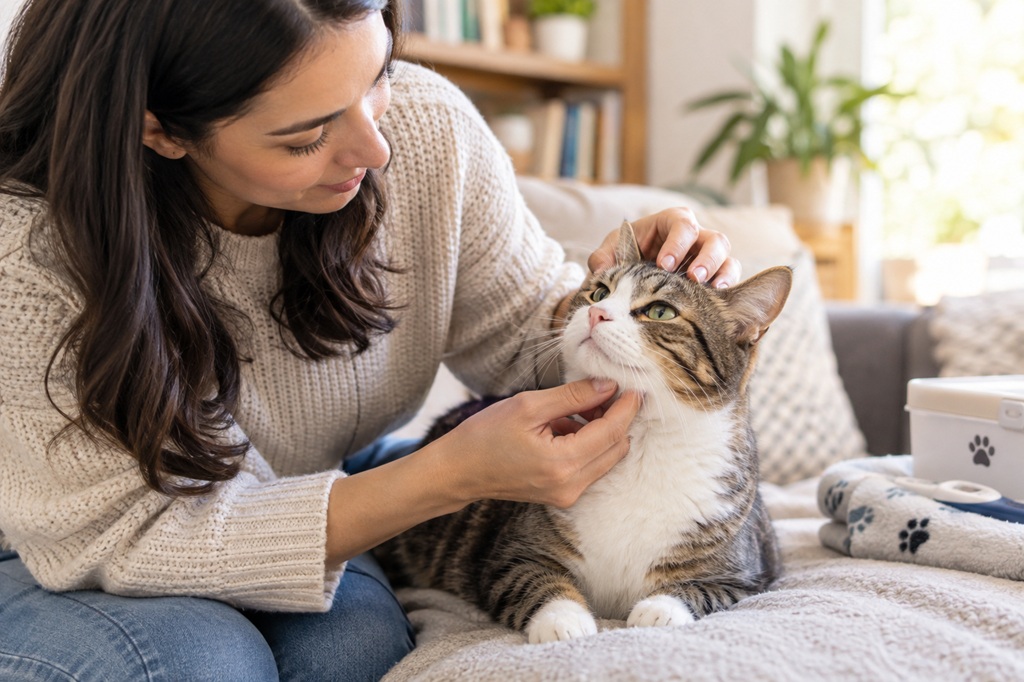
One of the easiest symptoms to overlook is a change in personality.
A normally social cat may suddenly:
- Hide under furniture
- Spend more time sleeping
- Stop greeting you
- Avoid being touched
- Stay in unusual places
- Become less interested in play
- Sit hunched or appear uncomfortable
- Seem generally “not quite right”
Cats can respond to illness or pain by becoming less active or withdrawing from people. Some cats may show the opposite behavior and become unusually clingy or demanding.
Because these changes can be subtle, knowing what is normal for your particular cat is extremely valuable.
What to do
If the change is sudden, persistent, or accompanied by another symptom — such as refusing food, vomiting, breathing changes, or difficulty urinating — contact your veterinarian.
2. Changes in Appetite
A cat suddenly eating less should not be dismissed as simple fussiness.
Watch for:
- Eating noticeably less
- Refusing food
- Suddenly becoming very selective
- Dropping food while eating
- Difficulty chewing
- Showing interest in food but failing to eat
- A significant increase in appetite
Changes in appetite can occur with many different health problems, including dental disease and systemic illnesses. A veterinarian needs to consider the cat’s other symptoms, age, history, and physical examination before determining the cause.
When is it more concerning?
Merck Veterinary Manual lists failure to eat or drink for 24 hours as a reason for immediate veterinary attention. It’s worth knowing why that specific threshold matters rather than treating it as an arbitrary rule: cats are unusually vulnerable to a condition called hepatic lipidosis (fatty liver disease) when they stop eating. The body mobilizes fat stores for energy, but a cat’s liver has limited capacity to process that fat quickly, and it can begin accumulating inside liver cells within as little as 24 to 72 hours of reduced or absent food intake — a genuinely dangerous, potentially fatal complication, and overweight cats are at meaningfully higher risk since they have more fat available to overwhelm the liver at once.
Don’t deliberately wait for a cat to become visibly weak before taking action.
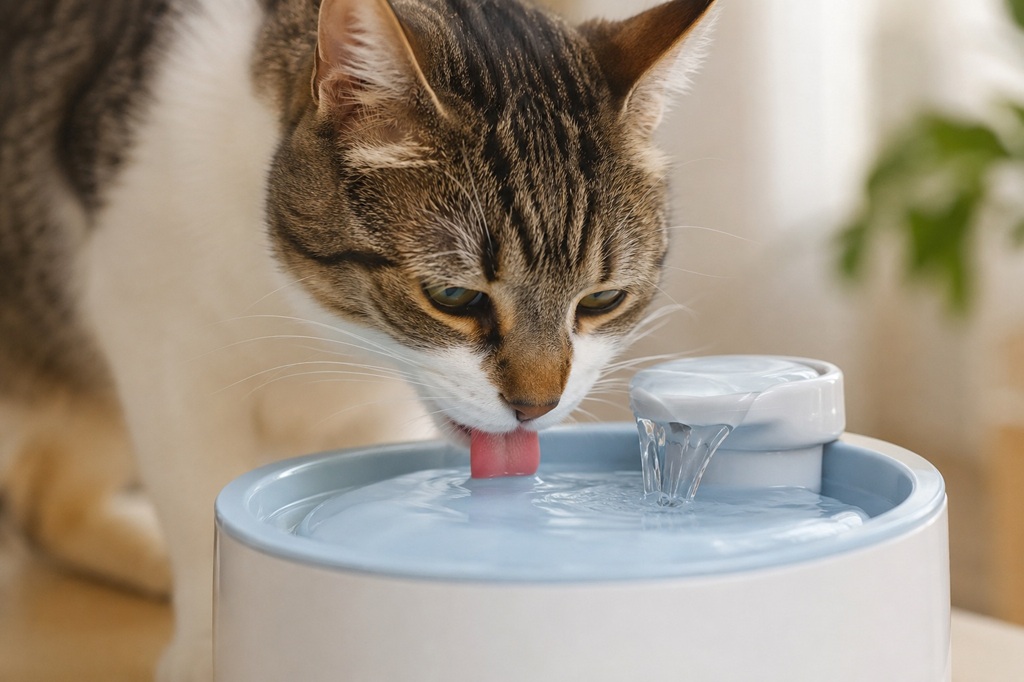
3. Drinking More or Less Than Usual
Changes in water consumption can be easy to miss, particularly if your cat drinks from several places or eats wet food.
Pay attention if your cat suddenly:
- Drinks much more
- Drinks much less
- Frequently visits the water bowl
- Starts seeking water from unusual places
- Combines increased drinking with increased urination
Increased thirst and urination can occur with several medical conditions, so they deserve attention rather than being assumed to be a normal change.
A useful habit
Know approximately how much water your cat normally consumes and observe whether that pattern changes.
You don’t need to obsessively measure every drop, but a noticeable change is worth recording.
4. Changes in the Litter Box
The litter box can provide some of the most useful clues about your cat’s health.
Look for changes such as:
- Urinating more frequently
- Urinating less frequently
- Producing unusually small amounts of urine
- Straining to urinate
- Repeatedly entering and leaving the litter box
- Urinating outside the litter box
- Blood in the urine
- Changes in stool consistency
- Diarrhea
- Hard, dry stools
- Difficulty passing stool
- No urine production
One particularly important warning sign is straining without producing urine.
A blocked urinary tract can become a life-threatening emergency, particularly in male cats.
Don’t assume it’s a behavior problem
If a cat that has always used the litter box suddenly begins urinating outside it, don’t automatically punish or label the behavior as “bad.”
A medical problem may be involved.
5. Vomiting
Occasional vomiting can occur in cats, but repeated or concerning vomiting should not simply be written off as “hairballs.”
Pay attention to:
- Repeated vomiting
- Vomiting accompanied by weakness
- Vomiting with diarrhea
- Vomiting combined with refusal to eat
- Blood in vomit
- Vomiting associated with obvious pain
- A sudden increase in vomiting frequency
The appearance of the vomit can also provide useful information to your veterinarian, so if possible, note what you observed.
Don’t attempt to diagnose the underlying cause from the vomit alone. Vomiting can occur for many different reasons.
6. Diarrhea or Abnormal Stool
Changes in stool can sometimes be temporary, but persistent or severe diarrhea needs attention.
Watch for:
- Frequent loose stools
- Watery diarrhea
- Blood in the stool
- Black or tar-like stool
- Mucus
- Strongly unusual odor
- Difficulty passing stool
- Repeated straining
- Diarrhea combined with vomiting or lethargy
Merck lists bloody, foul-smelling, or uncontrollable diarrhea and thick, black stools among signs requiring immediate veterinary attention.
If diarrhea is mild but continues, contact your veterinarian rather than allowing it to persist indefinitely.
7. Weight Loss
Slow weight loss can be difficult to notice because it may happen gradually.
You may notice:
- Ribs or spine becoming more prominent
- Looser-fitting harnesses
- Less muscle over the back or legs
- A change in body shape
- A reduction in overall condition
Unexpected weight loss can have many causes, including dental, gastrointestinal, metabolic, or other health problems.
This is particularly important if your cat appears to be eating normally — or even eating more — while continuing to lose weight.
Regularly monitoring your cat’s body condition and weight can help you notice changes earlier.
8. Sudden Weight Gain
Weight gain can also be worth monitoring.
Not every increase is a medical problem. Changes in food intake, activity, or body condition can contribute to weight gain.
However, sudden changes should be discussed with your veterinarian, especially if they occur alongside:
- Reduced activity
- Difficulty jumping
- Breathing changes
- Increased thirst
- Abdominal enlargement
- Changes in appetite
Merck lists sudden weight gain or loss among reasons to arrange veterinary evaluation.
9. Breathing Changes
Breathing problems deserve particular attention because they can become emergencies quickly.
Watch for:
- Difficulty breathing
- Rapid or labored breathing
- Shallow breathing
- Breathing with the mouth open
- Panting when there is no obvious reason
- Extended head and neck while breathing
- Unusual breathing sounds
- Blue or very pale gums or tongue
Cats normally breathe quietly. Open-mouth breathing or obvious difficulty breathing should not be treated as something to watch at home.
Breathing difficulty is considered an emergency requiring immediate veterinary attention.
If your cat is struggling to breathe, minimize stress and movement and contact an emergency veterinary service immediately.
10. Coughing or Persistent Sneezing
Occasional sneezing can happen when the nose is irritated.
But repeated coughing or persistent sneezing deserves attention.
Look for additional signs such as:
- Nasal discharge
- Eye discharge
- Difficulty breathing
- Loss of appetite
- Lethargy
- Fever
- Excessive salivation
Respiratory illnesses in cats can produce combinations of sneezing, nasal discharge, eye inflammation, salivation, and other signs.
Persistent coughing or sneezing should be discussed with your veterinarian, particularly if your cat’s overall condition is changing.
11. Changes Around the Eyes
Eye problems can sometimes progress quickly.
Watch for:
- Squinting
- Keeping one eye closed
- Redness
- Swelling
- Discharge
- Cloudiness
- Unequal pupils
- A suddenly enlarged or unusual-looking pupil
- Trouble seeing
- Bumping into objects
Eye abnormalities deserve prompt veterinary attention because some eye conditions can threaten vision.
One additional sign worth knowing specifically: if the third eyelid (a pale membrane in the inner corner of the eye) stays partially visible instead of fully retracted, that can be a sign of illness, pain, or dehydration — worth mentioning to your vet even if nothing else about the eye looks obviously wrong.
Don’t wait several days if the eye looks abnormal
A cat with a painful or injured eye may not show dramatic behavior changes. Squinting or keeping an eye partially closed can be an important clue.
12. Changes in the Mouth or Teeth
Cats can experience significant dental discomfort without making it obvious.
Possible warning signs include:
- Bad breath
- Drooling
- Difficulty chewing
- Dropping food
- Eating on one side of the mouth
- Refusing hard food
- Pawing at the mouth
- Swollen or bleeding gums
- Becoming reluctant to eat
A cat that seems “picky” may sometimes actually be experiencing oral discomfort.
Regular dental care and veterinary examinations can help identify dental problems before they become more advanced.
13. Excessive Grooming — or Suddenly Stopping Grooming
Grooming behavior can tell you a surprising amount about how your cat feels.
A sick or painful cat may groom less, resulting in:
- A dull or greasy coat
- Mats
- Increased shedding
- A generally unkempt appearance
On the other hand, excessive licking can also indicate a problem.
A cat may repeatedly groom one area because of:
- Skin irritation
- Parasites
- Pain
- Allergic disease
- Stress
- Other underlying problems
Repeated licking that creates bald or irritated areas deserves veterinary evaluation.
14. Limping or Difficulty Moving
Don’t ignore a change in the way your cat walks.
Look for:
- Limping
- Refusing to put weight on a leg
- Difficulty jumping
- Stiffness
- Reluctance to climb stairs
- Difficulty getting into the litter box
- Moving more slowly than usual
- Hiding after movement
- Unusual posture
A sudden inability to use a limb or severe lameness can require urgent veterinary attention.
Even a mild but persistent change should be evaluated.
15. Hiding More Than Usual
Hiding is one of the classic signs that something may be wrong — but it can be easy to dismiss.
A cat may hide because of:
- Pain
- Illness
- Fear
- Stress
- Environmental changes
The key is change from your cat’s normal behavior.
If your normally social cat suddenly spends most of the day underneath the bed, pay attention.
If hiding is accompanied by reduced appetite, vomiting, litter-box changes, breathing problems, or weakness, contact your veterinarian promptly.

16. Unusual Vocalization
A cat that suddenly starts crying, yowling, or vocalizing more than usual may be communicating that something has changed.
Pay attention to:
- Crying while using the litter box
- Vocalizing when picked up
- Nighttime yowling that is new
- Crying when moving
- Repeated vocalization combined with restlessness
- Sudden aggression or irritability
Pain is one possible explanation, but behavior can change for many reasons. A sudden change should be investigated rather than assumed to be behavioral.
17. Changes in Posture or Facial Expression
You don’t need to be able to interpret every subtle facial movement to notice when your cat looks uncomfortable.
Watch for:
- A hunched posture
- Head held unusually low
- Tucked-up body position
- Reluctance to move
- Flattened or unusual ear position
- Squinting
- A tense facial expression
- A change in the way your cat normally sits or rests
Cats experiencing pain may change their posture and normal behaviors.
If your cat simply looks uncomfortable and you cannot explain why, that alone can be a good reason to contact your veterinarian.
18. Pale, Blue, or Yellow Gums
The color of your cat’s gums can sometimes provide an important warning, and it’s one of the fastest checks available to you at home — the same first thing a vet looks at during a physical exam.
Abnormal colors can include:
- Very pale or white: may be associated with anemia or poor circulation
- Blue or gray: may indicate inadequate oxygen
- Yellow: may indicate jaundice
These changes can be serious. VCA and Merck both identify abnormal gum or tongue color as a reason for urgent veterinary assessment.
Color is only half of what’s useful to check. Gently lift your cat’s upper lip to expose the gum, then press a finger against it until it blanches white, and release. Count how long it takes to return to pink — this is called capillary refill time (CRT), and a healthy CRT is 1 to 2 seconds. A CRT that takes noticeably longer than that suggests poor circulation, dehydration, or shock, and is worth calling your vet about even if the color itself looked roughly normal. The whole check takes about five seconds.
If your cat’s gums or tongue suddenly look blue, gray, or very pale, seek emergency veterinary care.
19. Seizures, Collapse, or Problems Walking
Neurological changes should never be ignored.
Seek immediate veterinary care if your cat:
- Has a seizure
- Collapses
- Cannot stand
- Suddenly becomes severely disoriented
- Has major difficulty walking
- Loses consciousness
- Develops sudden severe weakness
These are among the signs Merck identifies as requiring immediate veterinary attention.
20. Sudden Changes in Behavior
Sometimes the symptom isn’t physical — it is behavioral.
A cat may suddenly become:
- Aggressive
- Extremely fearful
- Confused
- Restless
- Unusually clingy
- Very withdrawn
- Less interested in normal activities
Behavioral changes don’t automatically mean your cat is sick. Environmental stress can also affect behavior.
But a sudden unexplained behavioral change deserves attention, particularly when combined with physical symptoms.
Emergency Signs: Don’t Wait and See
Some symptoms require immediate veterinary attention rather than monitoring at home.
Contact an emergency veterinarian immediately if your cat has:
- Difficulty breathing
- Open-mouth breathing or severe respiratory distress
- Blue, gray, or very pale gums or tongue
- Collapse or loss of consciousness
- Seizures
- Severe or uncontrolled bleeding
- Suspected poisoning
- Severe or constant pain
- A serious injury or suspected broken bone
- Inability to urinate or straining without producing urine
- Sudden severe weakness
- Severe neurological problems
- Heatstroke
- Serious eye injury
- Major trauma
These are examples rather than a complete list. Emergencies can develop from many different conditions, and veterinary professionals recommend contacting a veterinarian promptly when a potentially life-threatening problem occurs.
When Should You Call the Vet Within 24 Hours?
Not every concerning symptom requires an emergency clinic, but that doesn’t mean you should ignore it.
Veterinary evaluation is appropriate when you notice things such as:
- Persistent coughing or sneezing
- Vomiting or diarrhea that continues
- Increased thirst
- A sudden behavior change
- Sleeping much more than normal
- Reduced appetite
- Squinting or cloudy eyes
- New discharge from the eyes, ears, or nose
- Persistent itching or skin changes
- Unexplained weight loss or gain
- Persistent lameness
- Drooling
Merck’s veterinary guidance specifically identifies several of these changes as reasons to see a veterinarian within 24 hours.
When in doubt, calling your veterinarian is better than trying to determine the seriousness yourself.
What You Should Do When You Notice a Change
If your cat suddenly seems unwell, avoid immediately trying to diagnose the problem.
Instead:
1. Observe
Write down what changed.
For example:
“My cat normally eats breakfast immediately, but today she only ate a few bites.”
That is much more useful to a veterinarian than simply saying, “She seems sick.”
2. Check the basics
Pay attention to:
- Food intake
- Water intake
- Urination
- Bowel movements
- Vomiting
- Breathing
- Activity
- Behavior
- Grooming
These are useful aspects of daily monitoring for a sick cat.
3. Note when it started
Record:
- When you first noticed it
- Whether it is getting better or worse
- How often it happens
- What happens immediately before or after the symptom
4. Contact your veterinarian
Explain the changes you’ve observed and follow the veterinary team’s instructions.
5. Don’t give human medication
Never give your cat human medication unless a veterinarian specifically instructs you to do so. Some medications that are commonly used by people can be dangerous to cats.
A Simple Daily Cat Health Check
You don’t need to perform a complicated examination every day.
Instead, spend a few minutes noticing your cat’s normal routine.
Appetite
Is your cat eating normally?
Water
Is drinking noticeably different?
Litter box
Is your cat urinating and defecating normally?
Energy
Is your cat behaving normally during its usual active periods?
Breathing
Is breathing quiet and comfortable?
Grooming
Does the coat look and feel normal?
Movement
Is your cat walking, jumping, and climbing normally?
Behavior
Does your cat seem like itself?
This simple routine can help you recognize changes earlier.
Why Knowing Your Cat’s “Normal” Matters
There isn’t one behavior that defines a healthy cat.
One cat may sleep more than another. One may be naturally quiet. Another may demand attention throughout the day.
That’s why comparing your cat with another cat isn’t always useful.
Instead, learn your own cat’s baseline.
Know:
- How much it usually eats
- When it usually plays
- How often it normally uses the litter box
- Where it likes to sleep
- How social it normally is
- How it normally walks and jumps
- How often it usually grooms itself
When that baseline changes, you have something meaningful to discuss with your veterinarian.
A Symptom Is Not a Diagnosis
This is especially important with cat health.
For example, increased thirst doesn’t automatically mean diabetes.
Vomiting doesn’t automatically mean a stomach problem.
Hiding doesn’t automatically mean pain.
Sneezing doesn’t automatically mean a respiratory infection.
The same symptom can occur with multiple conditions, and some illnesses produce very subtle signs.
Only a veterinarian who examines your cat and, when appropriate, performs diagnostic testing can determine the underlying cause.
The goal of home observation is therefore early recognition — not home diagnosis.
What to Tell Your Veterinarian
Before an appointment, write down the most important observations.
A useful checklist is:
Symptom: What changed?
Onset: When did it begin?
Frequency: How often is it happening?
Severity: Is it getting worse?
Appetite: Eating normally or not?
Water: Drinking normally or not?
Urination: Normal, increased, decreased, or difficult?
Stool: Normal, loose, hard, bloody, or unusual?
Behavior: More withdrawn, restless, vocal, or clingy?
Medication: Any medications or supplements?
Environment: Any recent changes, new foods, plants, chemicals, pets, or possible toxins?
This information can help your veterinarian understand the situation more quickly.
Final Takeaway
The most important sign that your cat may be sick is often simply a noticeable change from normal.
Don’t focus only on dramatic symptoms.
A cat that:
- suddenly hides,
- stops eating,
- drinks much more,
- uses the litter box differently,
- stops grooming,
- loses weight,
- becomes unusually quiet,
- starts vomiting,
- develops breathing changes,
- or suddenly behaves differently
may need veterinary attention.
And if your cat has difficulty breathing, cannot urinate, collapses, has a seizure, suffers severe trauma, has uncontrolled bleeding, or shows another obvious emergency sign, don’t wait to see whether it improves. Seek veterinary care immediately.
Cats often hide illness, so noticing small changes can matter.
You know your cat’s normal behavior better than anyone. When something doesn’t seem right, take that change seriously.
Frequently Asked Questions
How can I tell if my cat is sick?
Look for changes from your cat’s normal behavior, appetite, drinking, litter-box habits, grooming, activity, appearance, movement, or breathing. Cats can hide illness, so even subtle changes can be meaningful.
What are the most common signs of illness in cats?
Common warning signs include reduced appetite, vomiting, diarrhea, increased thirst or urination, coughing, sneezing with discharge, changes in grooming, weight changes, lethargy, limping, and behavioral changes.
Is hiding a sign that my cat is sick?
It can be. Cats may hide when they are sick or in pain, although stress and fear can also cause hiding. A sudden increase in hiding is more concerning when it occurs alongside other changes.
How long can a cat go without eating?
Don’t intentionally wait to see how long your cat can go without food. Merck Veterinary Manual lists failure to eat or drink for 24 hours as a reason for immediate veterinary attention — this threshold exists specifically because cats can develop a serious liver condition (hepatic lipidosis) from not eating, faster than most other species.
Is difficulty breathing an emergency in cats?
Yes. Difficulty or shallow breathing, open-mouth breathing, and obvious respiratory distress require immediate veterinary attention.
How do I check my cat’s gum color and capillary refill time at home?
Gently lift the upper lip to see the gum, which should be a moist, uniform pink. Press a finger against it until it turns white, release, and count how long it takes to return to pink — 1 to 2 seconds is normal. Pale, white, blue, gray, or yellow gums, or a refill time noticeably longer than 2 seconds, are reasons to contact your vet promptly.
Should I wait if my cat is acting differently but has no obvious symptoms?
Not necessarily. A sudden unexplained change in behavior can be an early sign of a health problem. If the change persists, worsens, or concerns you, contact your veterinarian.
Sources: VCA Animal Hospitals (“Recognizing the Signs of Illness in Cats,” “Emergencies in Cats,” “How Do I Know if My Cat is in Pain?,” “Caring for Your Sick Cat”); Merck Veterinary Manual (“When to See a Veterinarian,” “Routine Health Care of Cats,” “Feline Respiratory Disease Complex,” “Evaluation and Initial Treatment of Dog and Cat Emergencies,” “What to Do in a Dog or Cat Emergency”); Cornell Feline Health Center, Cats.com, Petco, and Great Pet Care (capillary refill time technique).
Last reviewed: 12 September 2026.