
A clean litter box is more than a matter of keeping your home smelling fresh. Cats are sensitive to the cleanliness, smell, texture, and location of their toilet area, and a dirty or unpleasant box can contribute to litter-box avoidance.
The most effective approach is simple: scoop frequently, remove waste properly, clean the box regularly, and avoid products or scents that may make the box unpleasant for your cat.
For most households:
Scoop at least once a day → remove waste → maintain litter depth → wash the box regularly → dry it completely → refill with appropriate litter.
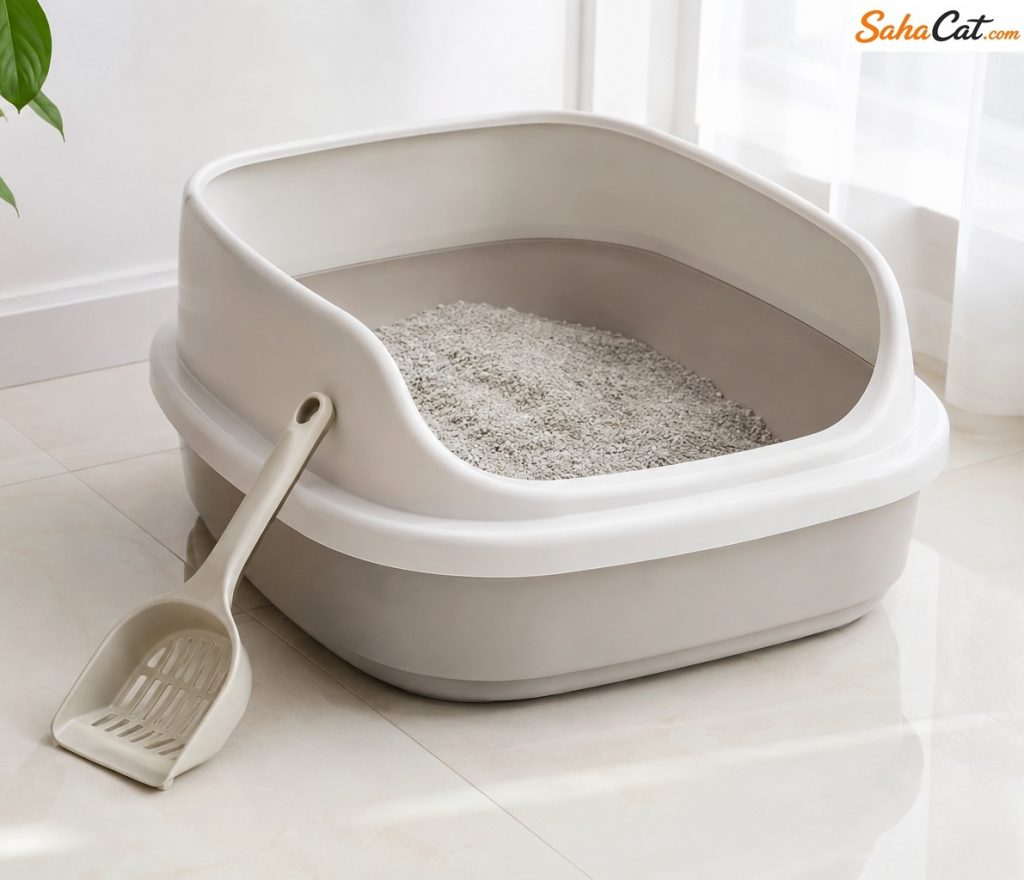
Why Keeping the Litter Box Clean Matters
Cats have a strong sense of smell, and many prefer a clean place to eliminate.
A dirty box can become less attractive and may contribute to litter-box avoidance. Cleaning also matters for household hygiene because cat feces can contain organisms such as Toxoplasma gondii.
The goal is not to create a sterile environment. It is to provide a clean, dry, comfortable, accessible toilet area that your cat is happy to use.
The Best Litter Box Cleaning Routine
Divide litter-box care into two routines.
Daily maintenance
- Scoop urine clumps and feces.
- Remove visibly soiled litter.
- Check the box for unusual urine or stool.
- Add fresh litter when needed.
- Clean up litter around the box.
Regular deep cleaning
- Empty the box.
- Wash it.
- Rinse it thoroughly.
- Dry it completely.
- Refill it with fresh litter.
Step 1: Gather Your Supplies
You do not need complicated cleaning products.
Useful supplies include:
- A litter scoop
- A trash bag or suitable waste container
- Fresh cat litter
- Warm water
- Mild, unscented soap when needed
- Disposable gloves if preferred
- Paper towels or a clean towel
- A separate brush or sponge used only for the litter box
Keep litter-box cleaning supplies separate from kitchen cleaning equipment. Do not clean pet supplies in food-preparation areas.
Step 2: Scoop the Litter Every Day
For most cats, daily scooping should be the foundation of litter-box maintenance.
Remove:
- Feces
- Urine clumps from clumping litter
- Obviously contaminated litter
- Foreign material
The ASPCA recommends scooping at least once a day.
In multi-cat households, more frequent scooping may be necessary because the box becomes soiled faster.
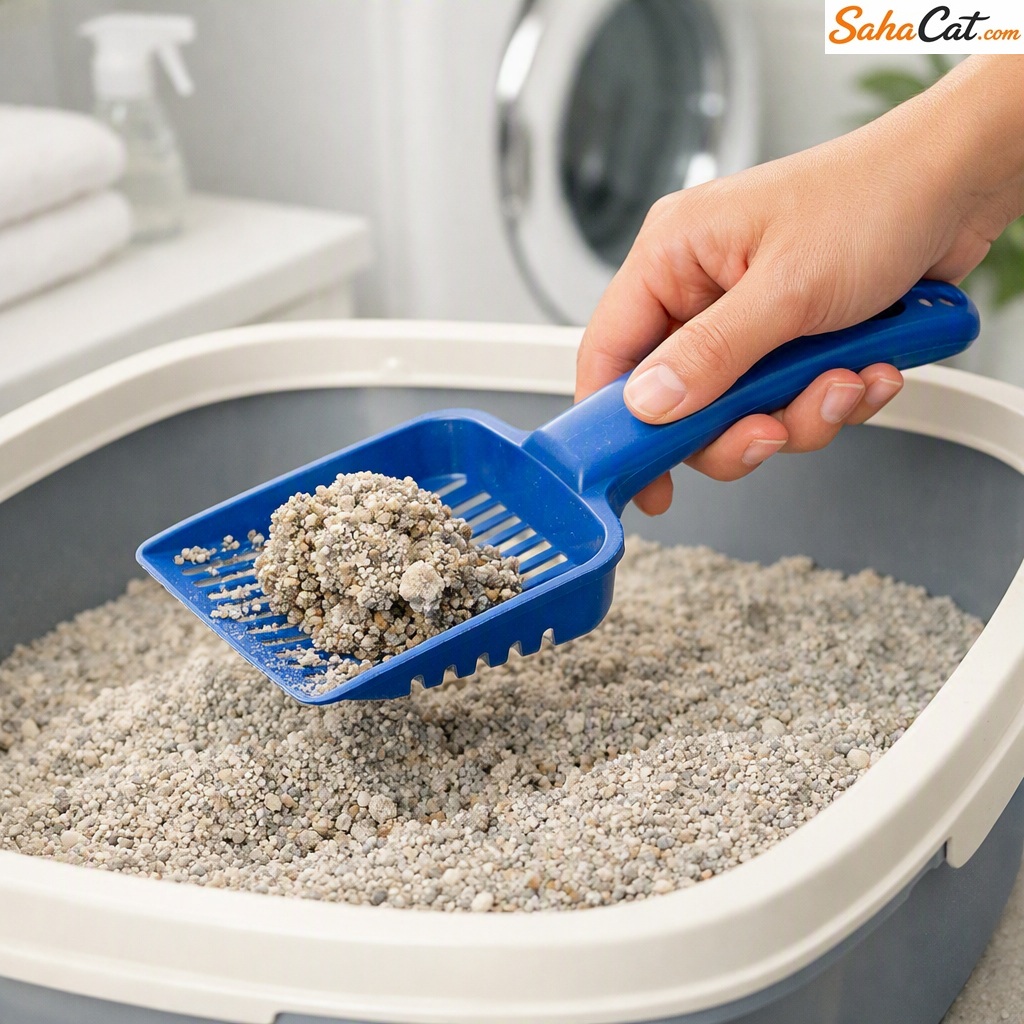
Step 3: Use the Scoop Properly
With clumping litter:
- Locate the urine clumps.
- Slide the scoop underneath them.
- Lift the clump carefully.
- Remove feces.
- Shake the scoop gently if necessary to separate clean litter.
- Dispose of the waste.
- Smooth the remaining litter.
This helps preserve clean litter rather than throwing away large amounts unnecessarily.
Step 4: Keep Enough Clean Litter in the Box
After scooping, check the litter depth.
If it has become too low, add fresh litter according to the litter type and your cat’s preferences.
Do not continually allow the litter to become extremely shallow. At the same time, more litter is not necessarily better. The ASPCA suggests around 1–2 inches for many cats.
Your cat’s preference should ultimately guide the setup.
Step 5: Do Not Use Strong Fragrances to Hide Odors
One common mistake is trying to make the litter box smell like perfume.
Avoid relying on:
- Strongly scented cleaners
- Air fresheners
- Perfumed litter
- Deodorizing sprays
- Fragrance-heavy powders
A smell that seems pleasant to you may be unpleasant to your cat.
The better solution is to remove the source of the odor instead of covering it up:
- Scoop regularly.
- Remove urine-soaked litter.
- Clean the box.
- Clean surrounding surfaces when necessary.
- Keep the area well maintained.
Step 6: Empty the Box for a Deeper Cleaning
At regular intervals, completely empty the litter box.
The ideal frequency depends on:
- Type of litter
- Number of cats
- Number of boxes
- Box size
- How quickly it becomes dirty
- Your cat’s tolerance for a used box
The ASPCA recommends regular complete cleaning, with weekly cleaning as a general guideline for many households.
A multi-cat home may need more frequent maintenance.
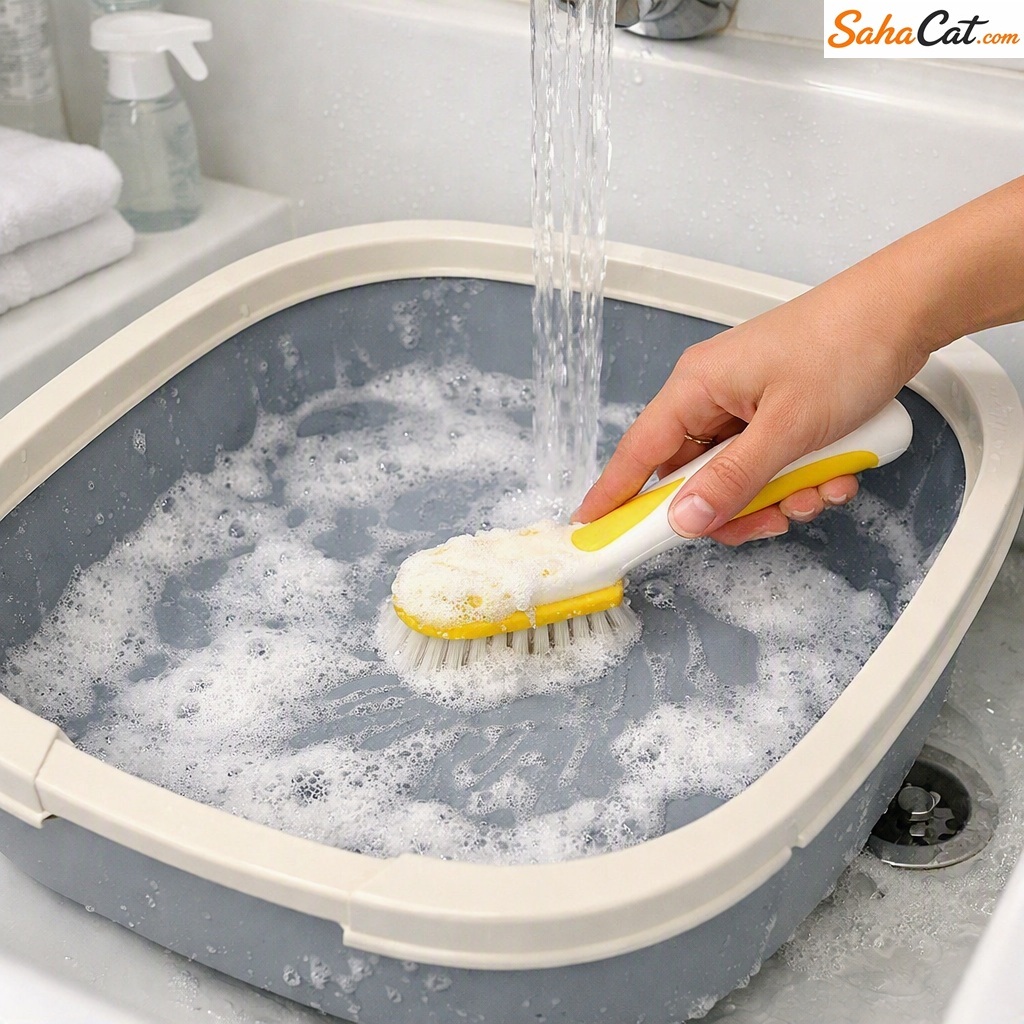
Step 7: Wash the Litter Box
Once the litter is removed:
- Take the empty box to an appropriate cleaning area.
- Remove remaining litter and debris.
- Wash it with warm water.
- Use mild, unscented soap if necessary.
- Scrub the bottom and sides.
- Pay attention to corners where urine or litter can accumulate.
- Rinse thoroughly.
Step 8: Rinse Away Cleaning Residue
Do not leave soap residue inside the litter box.
Rinse thoroughly until cleaning-product residue has been removed.
Your cat’s paws will contact the surface, and the cat may later groom those paws.
Step 9: Dry the Box Completely
Before adding fresh litter, make sure the box is completely dry.
You can:
- Air-dry it.
- Wipe it with a clean towel.
- Leave it in a well-ventilated area until dry.
Adding litter to a wet box can cause litter to stick to the bottom.
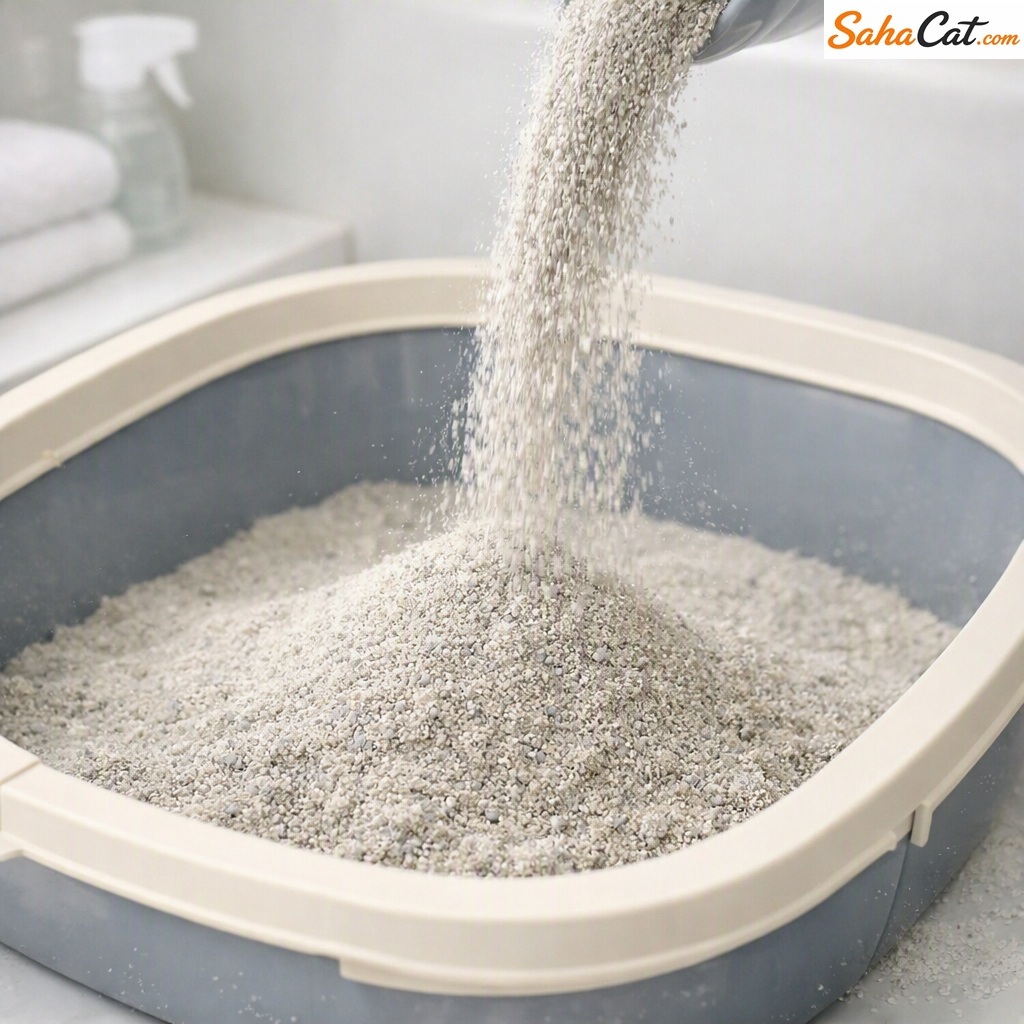
Step 10: Refill With Fresh Litter
Once the box is dry, add fresh litter.
If your cat already uses a particular litter successfully, there may be little reason to change it simply because another product is marketed as better.
Many cats prefer unscented litter with a relatively fine texture.
If you are changing litter
Avoid sudden changes when possible.
A gradual transition can help some cats accept a new litter more easily. If your cat strongly rejects the new litter, consider returning to the previous type or offering different options in separate boxes.
What About Bleach and Disinfectants?
For ordinary routine cleaning, you generally do not need harsh disinfectants.
Warm water and an appropriate mild, unscented soap are sufficient for routine cleaning.
Disinfection can be appropriate in certain situations, but disinfectants need to be used correctly. Bleach, for example, should only be used according to appropriate veterinary or public-health guidance, including correct dilution, contact time, and thorough rinsing.
Never mix cleaning chemicals. It’s worth knowing specifically why this matters here, not just as an abstract rule: cat urine already contains ammonia, so using bleach on a box that hasn’t been thoroughly rinsed of urine residue is a real, concrete version of the classic bleach-plus-ammonia hazard, which produces toxic chloramine fumes. This is easy to avoid entirely by sticking to mild soap and water for routine cleaning and reserving bleach, used correctly and with full rinsing, for occasional deeper disinfection.
Do not leave chemical residues where your cat can contact them.
Avoid Ammonia-Based Cleaners
Ammonia-based products are a poor choice for litter-box cleaning.
The ASPCA advises against ammonia, deodorants, and strong scents when cleaning litter boxes.
Cats have highly sensitive noses, and strong unfamiliar odors can make a box less appealing.
The same logic applies to “natural” essential-oil-based cleaners, which are worth avoiding for a different reason: many essential oils are toxic to cats, and a litter box is a surface she has frequent, close contact with. Stick to plain mild soap rather than reaching for a scented or essential-oil cleaner marketed as a gentler alternative.
What About Vinegar?
Vinegar is sometimes recommended online as a universal pet-cleaning solution.
It is not necessary for routine litter-box cleaning. Cornell advises avoiding cleaning products containing ammonia or vinegar when cleaning areas where cats have urinated because of their odor and potential irritation.
For routine litter-box cleaning, keep the approach simple:
Warm water + appropriate mild, unscented soap when needed + thorough rinsing + complete drying.
Should You Use a Litter Box Liner?
Some cats do not like litter-box liners.
A liner that bunches up, moves underneath your cat’s paws, or catches claws can make the box uncomfortable.
If your cat uses a liner happily, it may be fine. If your cat starts avoiding the box after you introduce one, remove it and see whether the problem improves.
What about self-cleaning litter boxes?
An automatic, self-cleaning litter box can help with scooping consistency, particularly on busy days — but treat it as a convenience layer on top of the routine above, not a replacement for the weekly deep clean or daily inspection. Some cats are initially wary of the automatic mechanism’s noise or movement, so if you introduce one, keep a familiar manual box available alongside it at first rather than switching all at once.
Do Not Forget the Area Around the Litter Box
Check the surrounding area for:
- Scattered litter
- Urine splashes
- Stool
- Dust
- Fur
- Tracked litter
- Odor
Sweep or vacuum loose litter regularly.
If your cat has an accident outside the box, clean the area thoroughly. An enzymatic cleaner designed for pet odors can help neutralize accident odors.
Simply masking an odor may not remove the scent cues that encourage repeat elimination.
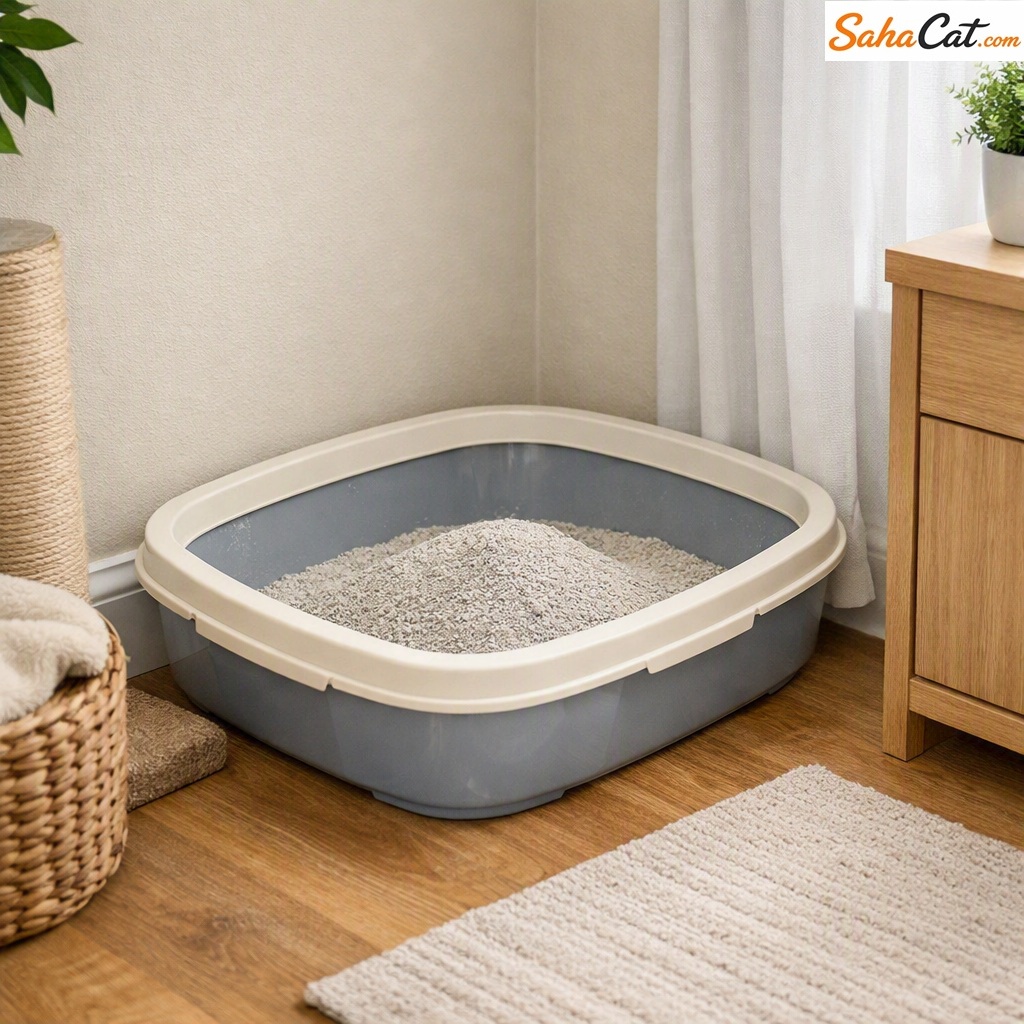
How Many Litter Boxes Should You Have?
A useful starting guideline is:
Number of cats + 1 = number of litter boxes
For example:
- 1 cat → 2 boxes
- 2 cats → 3 boxes
- 3 cats → 4 boxes
Cornell recommends keeping as many boxes as cats in the household, plus one.
This is not a rigid rule for every home, but it is a useful starting point.
Multiple boxes can reduce competition between cats and give them more choices.
Where Should the Litter Box Be Located?
A clean litter box can still fail if it is in a poor location.
Choose a place that is:
- Quiet
- Easily accessible
- Away from food and water
- Not constantly exposed to loud activity
- Easy for the cat to enter and leave
- Available whenever the cat needs it
Do not hide a litter box somewhere your cat can only reach by squeezing through a difficult passage.
What If Your Cat Suddenly Stops Using the Clean Litter Box?
Do not immediately assume your cat is being stubborn.
Possible reasons include:
- A medical problem
- Litter aversion
- A location problem
- Stress
- Conflict with another animal
- A dirty or unpleasant box
- A change in litter texture or scent
If the change is sudden, consult a veterinarian rather than assuming it is behavioral.
A particularly important warning
If your cat repeatedly enters the box, strains, cries, or appears unable to urinate, this is not simply a cleaning problem.
A blocked urinary tract can become life-threatening, particularly in male cats.
Seek veterinary care immediately.
How to Clean the Litter Box Safely
Basic hygiene matters.
After cleaning:
- Wash your hands thoroughly with soap and water.
- Do not touch your face while cleaning.
- Keep children away from the litter box.
- Keep the box away from food-preparation areas.
- Dispose of waste appropriately.
The CDC recommends washing your hands after cleaning a litter box, even when using a scoop.
Special Precautions During Pregnancy
Pregnant people should take additional precautions because cat feces can contain Toxoplasma gondii, a parasite that can cause toxoplasmosis.
The CDC recommends that pregnant people, when possible, have someone else clean the litter box. If there is no alternative, the CDC recommends using disposable gloves and washing hands thoroughly afterward.
Daily cleaning is also important because Toxoplasma does not become infectious immediately after being shed in feces.
People with weakened immune systems should discuss appropriate precautions with their healthcare provider.
This does not mean that pregnant people need to give up their cats. Good hygiene and appropriate precautions are important.
A 5-Minute Daily Litter Box Routine
If you want the simplest possible routine:
Every day
1. Scoop
Remove feces and urine clumps.
2. Inspect
Notice anything unusual about the urine or stool.
3. Level the litter
Add fresh litter if necessary.
4. Clean around the box
Remove tracked litter and visible mess.
5. Wash your hands
Always finish with proper handwashing.
A few minutes every day is generally easier than allowing the box to become heavily soiled.
A Weekly or Regular Deep-Clean Routine
When it is time for a deeper clean:
Before starting
- Prepare fresh litter.
- Prepare warm water.
- Get mild, unscented soap if needed.
- Have a clean towel ready.
Then:
- Empty the box completely.
- Remove stuck litter.
- Wash with warm water.
- Use mild unscented soap if needed.
- Scrub the bottom and corners.
- Rinse thoroughly.
- Dry completely.
- Inspect the box for cracks or damage.
- Add fresh litter.
- Return the box to its normal location.
If the plastic has become deeply scratched, cracked, permanently odorous, or difficult to clean, replacing the box may be more practical.
Common Litter Box Cleaning Mistakes
Mistake 1: Only cleaning when it smells
If you can smell the litter box strongly, it has probably been neglected for too long.
Better: Scoop on a routine schedule rather than waiting for odor.
Mistake 2: Using heavily scented products
A strong fragrance may make the box less attractive to your cat.
Better: Use unscented cleaning products and let cleanliness — not perfume — control odor.
Mistake 3: Changing litter unnecessarily
Some cats are very particular about texture and scent.
Better: If your cat is happily using its current litter, do not change it without a reason.
Mistake 4: Using ammonia-based cleaners
Ammonia and strong scents are poor choices for routine litter-box cleaning.
Better: Use warm water and an appropriate mild, unscented soap when necessary.
Mistake 5: Forgetting the litter scoop
A dirty scoop can transfer waste and odor back into clean litter.
Better: Clean the scoop periodically.
Mistake 6: Cleaning the box but ignoring the location
A spotless box in a stressful or inaccessible location may still be rejected.
Better: Consider the entire litter-box environment.
Mistake 7: Treating litter-box avoidance as bad behavior
A cat that stops using the box may have a medical problem.
Better: Investigate health, cleanliness, litter preference, location, and stress.
How to Tell if Your Litter Box Is Clean Enough
Ask yourself:
- Is there visible feces?
- Are urine clumps accumulating?
- Does the box smell strongly?
- Is the litter excessively damp?
- Is the litter level adequate?
- Is the box visibly dirty?
- Does your cat willingly use it?
- Are multiple cats sharing a box too heavily?
If the answer to several questions is yes, it is time for maintenance.
The goal is not to create a sterile environment. The goal is a clean, dry, comfortable, accessible toilet area that your cat is happy to use.
The Best Litter Box Cleaning Schedule
| Task | How Often |
|---|---|
| Scoop feces | At least daily |
| Remove urine clumps | At least daily |
| Check litter level | Daily |
| Clean scattered litter | Daily/as needed |
| Wash litter box | Regularly; often about weekly depending on litter and household |
| Replace damaged box | When cracked, deeply scratched, or persistently odorous |
| Wash hands | Every time after cleaning |
The exact deep-cleaning schedule can vary. A multi-cat household may need more frequent maintenance than a home with one cat.
Final Thoughts
The best way to clean your cat’s litter box is not to use the strongest cleaner or spend hours scrubbing it.
It is to keep up with a simple routine.
Scoop at least once a day. Keep the litter at a comfortable level. Wash the box regularly with warm water and an appropriate mild, unscented product when needed. Avoid strong fragrances and ammonia-based cleaners. Keep the surrounding area clean, and always wash your hands afterward.
Most importantly, pay attention to your cat.
If a cat that normally uses its litter box suddenly avoids it, strains, urinates outside the box, or shows other unusual elimination behavior, do not assume the problem is simply a dirty box. A medical or behavioral issue may be involved.
A clean litter box is not just easier for you to manage — it is an important part of making your cat’s everyday environment comfortable and predictable.
Frequently Asked Questions
How often should I scoop my cat’s litter box?
At least once a day is a good baseline. In multi-cat households or with boxes that become dirty quickly, more frequent scooping may be necessary.
How often should I completely change cat litter?
It depends on the type of litter, number of cats, number of boxes, and how quickly the litter becomes soiled. The ASPCA recommends regular complete cleaning and replacement, with weekly cleaning as a general guideline, while individual circumstances can require a different schedule.
What is the best cleaner for a cat litter box?
For routine cleaning, warm water and a mild, unscented soap can be sufficient. Avoid ammonia, deodorants, essential-oil-based products, and strong fragrances.
Can I use bleach to clean a cat litter box?
Disinfectants such as diluted bleach may have appropriate uses in specific circumstances, but they must be used correctly, including proper dilution, contact time, and rinsing. They are not necessary for every routine litter-box cleaning, and bleach should never be used on a box that hasn’t been thoroughly rinsed of urine first, since cat urine contains ammonia and mixing the two produces toxic fumes.
Why does my cat stop using a clean litter box?
Possible reasons include medical problems, stress, litter preference, location, box size, conflict with other animals, or other environmental factors. If the change is sudden, consult your veterinarian rather than assuming it is behavioral.
Should I use scented litter?
Many cats prefer unscented litter. If your cat is successfully using unscented litter, there is usually little reason to add strong fragrance simply to make the box smell better.
How many litter boxes should I have?
A useful starting guideline is one box per cat, plus one extra. For example, a two-cat household would ideally have three boxes.
Is cleaning a litter box dangerous?
For most people, routine litter-box cleaning is manageable with good hygiene. Wash your hands afterward and avoid touching your face while cleaning. Pregnant people and those with weakened immune systems should take additional precautions because of the risks associated with organisms in cat feces.
Are self-cleaning litter boxes worth it?
They can help with scooping consistency, but they’re a convenience layer, not a replacement for the weekly deep clean or for basic hygiene precautions. Introduce one gradually alongside a familiar manual box, since some cats are initially wary of the mechanism.
Sources
- ASPCA — Litter Box Problems and General Cat Care
- CDC — Toxoplasmosis Prevention and Pet Hygiene
- Cornell Feline Health Center — Feline House-Soiling and Litter Box Guidance
- Cornell Animal Health Diagnostic Center — Disinfectant Guidance
Last reviewed: 5 September 2026.