
Choosing a cat breed is about more than picking the cat you find cutest. The right choice depends on how well a cat’s personality, activity level, social needs, grooming requirements, size, and care needs fit your home and daily routine.
A breed can give you useful clues about what to expect, but it cannot predict an individual cat’s personality perfectly. Two cats of the same breed can have very different temperaments.
The best approach is to start with your lifestyle and home, then look for cats whose typical characteristics fit those conditions.

Start With Your Home and Lifestyle
Before comparing breeds, think about the environment you can realistically provide.
Ask yourself:
- How much time will the cat spend alone?
- Do you live in an apartment or a house?
- How active are you?
- Do you want a calm companion or an energetic playmate?
- How much grooming are you willing to do?
- Are you comfortable with a vocal cat?
- Do you have young children?
- Are there already cats or dogs in the home?
- Can you provide climbing areas, scratching posts, toys, and hiding places?
- Can you afford routine veterinary care and potential breed-related health expenses?
There is no universally “best” cat breed. There is only a breed — or an individual cat — that may be a better match for your circumstances.
1. Consider Activity Level
One of the biggest differences between cat breeds is their typical energy level.
Some cats are happy spending much of the day relaxing, while others need frequent opportunities to run, climb, explore, and solve problems.
If you want an energetic cat
Breeds such as the Bengal and Devon Rex are known for being active, intelligent, and playful.
A high-energy cat may need:
- Daily interactive play
- Climbing opportunities
- Scratching posts
- Puzzle feeders
- Rotating toys
- Safe places to explore
- Regular interaction with people
Simply having a large room does not automatically satisfy an energetic cat. What matters is how effectively the environment allows the cat to move, climb, explore, and engage with its surroundings.
If you prefer a calmer companion
Some breeds are generally more relaxed.
For example, Persian cats are typically described as gentle and quiet, making them potentially suitable for households that prefer a calmer atmosphere.
However, “calm breed” does not mean “no care required.” Every cat still needs exercise, play, enrichment, and attention.

2. Think About How Social You Want Your Cat to Be
Cats vary considerably in how much interaction they seek from people.
Some are content to spend periods of time independently. Others actively seek human company and may follow their owners around the house.
Very social breeds
Siamese and Tonkinese cats are known for being highly people-oriented and interactive.
These cats can be wonderful companions for someone who enjoys:
- Frequent interaction
- Play sessions
- Training
- Communication with the cat
- A cat that wants to participate in household activities
But that same social nature can become challenging if the cat is regularly left alone for long periods.
A useful question
Don’t just ask:
“Do I want a friendly cat?”
Ask:
“How much interaction can I realistically provide every day?”
That’s a much more useful way to approach breed selection.
3. Consider Grooming Requirements
Coat type can have a major impact on your daily routine.
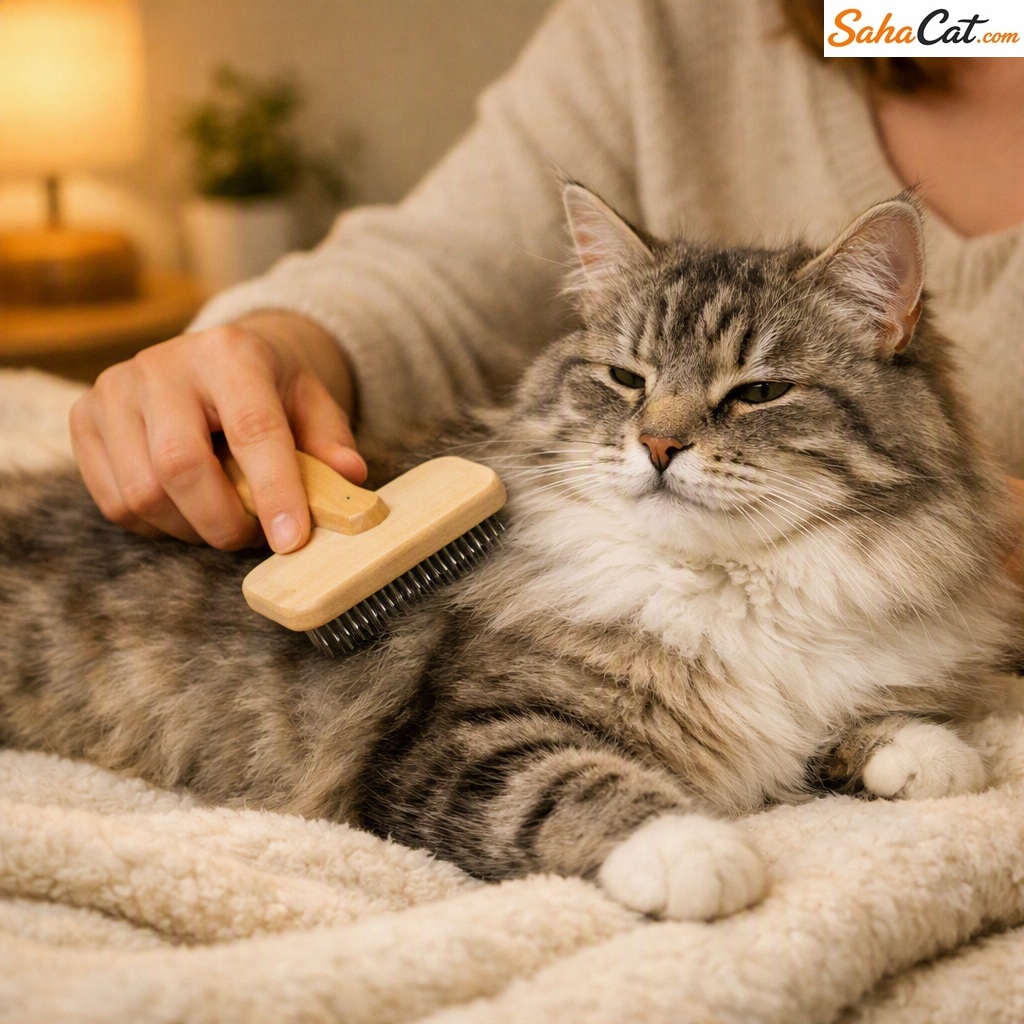
A long-haired cat may require considerably more grooming than a short-haired cat.
Long-haired breeds
Persians, for example, have coats that require substantial grooming and maintenance.
Depending on the individual cat’s coat, grooming may involve:
- Regular brushing
- Checking for mats
- Cleaning around the face when necessary
- Monitoring skin and coat condition
- More frequent coat maintenance than a short-haired cat
If you love the appearance of a long-haired breed but dislike grooming, you may eventually find the maintenance frustrating.
Short-haired cats
Short-haired cats generally require less coat maintenance, although they still benefit from regular brushing and routine grooming.
The important point is to choose a grooming commitment that fits your actual lifestyle — not the lifestyle you hope to have.
4. Think About Vocalization
Some cats are naturally more vocal than others.
Siamese cats, for example, are well known for being communicative and vocal.
If you enjoy a cat that frequently “talks” to you, this can be part of the appeal.
But if you live in an apartment and strongly prefer a quiet environment, you may want to consider breeds and individual cats known for calmer communication styles.
Remember that vocalization isn’t determined entirely by breed. Individual personality, environment, attention-seeking, stress, and health can also influence how much a cat vocalizes.
5. Consider the Cat’s Size
Size can affect the practical setup of your home.
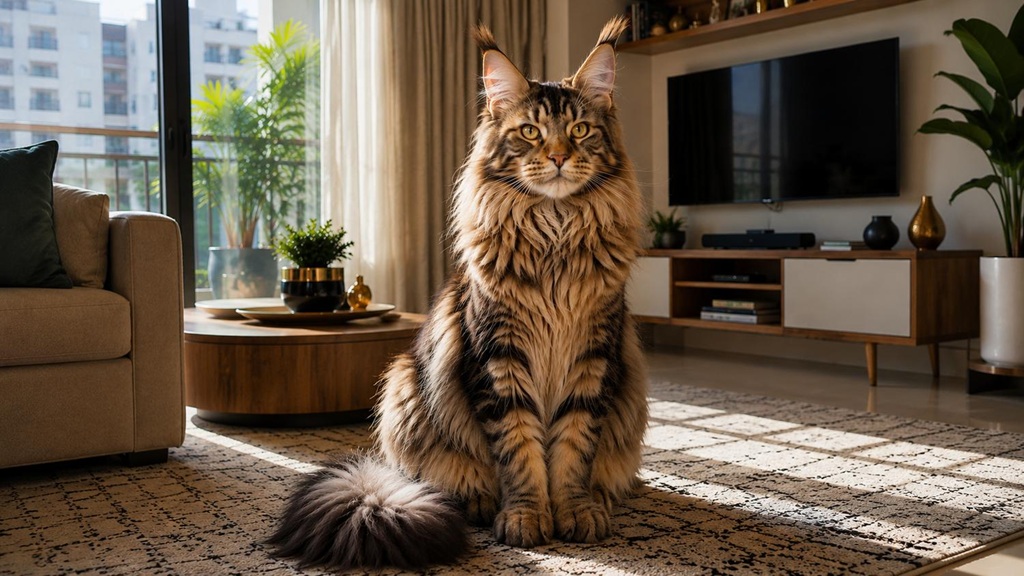
The Maine Coon is one example of a particularly large cat breed. A large cat may need appropriately sized:
- Litter boxes
- Cat carriers
- Scratching posts
- Cat trees
- Beds
- Food and water areas
A small apartment can still work for a large cat, but you’ll need to think carefully about the equipment and vertical space available.
The question isn’t simply:
“Is my home big enough?”
Instead ask:
“Can I provide enough usable territory and appropriately sized resources?”
6. Think About Children in the Household
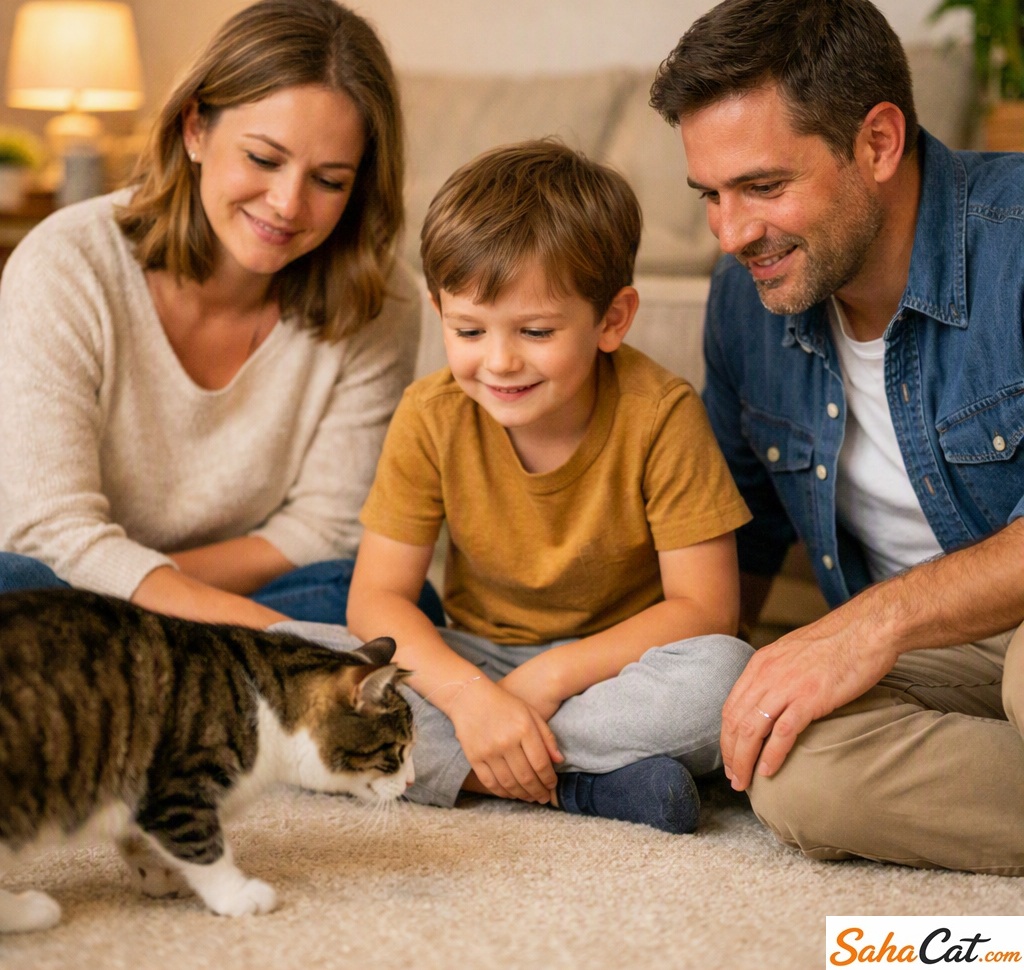
If you have children, don’t choose a breed solely because it has a reputation for being “good with kids.”
A successful relationship depends on both the cat and the child’s behavior.
Children should learn:
- Not to chase a cat
- Not to pull its tail or ears
- Not to disturb it while eating
- Not to force physical contact
- How to recognize when a cat wants space
- How to interact gently
Even a patient cat needs places where it can retreat from activity.
For a family with children, an individual cat’s temperament and tolerance may be more useful than breed reputation alone.
7. Consider Other Pets
If you already have a cat or dog, compatibility becomes another important consideration.
Some cats are highly social and may enjoy living with other animals. Others prefer to be the only pet.
However, breed alone cannot guarantee compatibility.
When introducing a new cat, factors such as:
- Individual temperament
- Previous experience with animals
- Age
- Socialization
- Introduction process
- Available space
can all influence the outcome.
A slow, controlled introduction is generally more important than simply selecting a particular breed.
Cat Breed Characteristics at a Glance
Here are a few examples of how different breed tendencies might fit different households:
| What you’re looking for | Breeds worth researching | Important consideration |
|---|---|---|
| Calm and relatively quiet | Persian, British Shorthair | Grooming and individual temperament still matter |
| Very social and interactive | Siamese, Tonkinese | May want considerable human interaction |
| Energetic and playful | Bengal, Devon Rex | Needs enrichment and daily activity |
| Large and social | Maine Coon | Requires appropriately sized equipment and space |
| Adaptable family companion | American Shorthair | Individual personality still varies |
This table should be treated as a starting point for research, not a guarantee of personality.
Apartment or House: Which Cat Is Better?
You don’t necessarily need a house with a large yard to provide a good home for a cat.
Cats can thrive in apartments when their environment is designed around their needs.
Useful features include:
- Vertical climbing areas
- Window perches
- Scratching surfaces
- Interactive toys
- Hiding places
- Comfortable resting areas
- Separate food, water, and litter areas where practical
- Regular play and interaction
A large house isn’t automatically better if the cat has little enrichment.
Likewise, an apartment isn’t automatically unsuitable if it provides a thoughtfully designed indoor environment. Our full guide to apartment vs. house living covers this in more depth.
What About First-Time Cat Owners?
If this is your first cat, you may be tempted to choose a breed based on appearance or popularity.
Instead, prioritize characteristics you can manage confidently.
For example, consider:
- How much daily interaction you can provide
- How much grooming you can handle
- How active you want your cat to be
- Whether you are comfortable with vocal behavior
- Whether you can afford routine and unexpected veterinary care
- Whether your household is calm or busy
A moderately demanding cat that fits your lifestyle is often a better choice than a breed you love visually but cannot realistically accommodate.
Don’t Ignore Adult and Mixed-Breed Cats
Choosing a cat does not have to mean choosing a pedigree breed.
Many household cats are mixed-breed or have unknown ancestry, and they can make excellent companions.
In fact, adopting an adult cat can sometimes make personality matching easier because you can observe more of the cat’s established temperament.
When meeting an adult cat, pay attention to:
- How it responds to people
- Whether it seeks interaction or prefers distance
- Its activity level
- How it responds to handling
- How it reacts to other animals when this information is available
- Whether its behavior seems appropriate for your household
Breed can provide expectations. An individual cat gives you actual information.

Breed Is a Clue, Not a Personality Guarantee
This is one of the most important things to remember.
Breed descriptions are based on tendencies, not promises.
For example, Siamese cats are commonly described as vocal and people-oriented. That doesn’t mean every Siamese cat will constantly talk or demand attention.
Similarly, a breed often described as calm can still contain individuals who are playful, energetic, shy, or highly social.
Genetics, early experiences, socialization, environment, age, and individual personality all contribute to behavior.
That’s why you should never reject or choose a cat based on a single breed stereotype.
Consider Breed-Related Health Needs
Some breeds have health concerns that prospective owners should research before making a decision.
This is particularly important when purchasing from a breeder.
Ask:
- What health conditions are associated with this breed?
- What screening do the parents receive?
- Can the breeder provide relevant health records?
- What veterinary care has the kitten received?
- What information is available about the parents’ health?
For example, Maine Coon cats can have breed-specific health considerations, including hypertrophic cardiomyopathy (HCM), the most common heart disease in cats, with a well-documented genetic link (a mutation in the MYBPC3 gene) also identified in Ragdolls. Prospective owners should discuss appropriate screening and health history with a responsible breeder.
Two other breed-specific conditions worth naming directly: polycystic kidney disease (PKD), a genetic condition causing fluid-filled kidney cysts historically common in Persians, for which genetic testing exists; and brachycephalic (flat-faced) airway issues in Persians and Exotic Shorthairs specifically, where the shortened skull shape can cause breathing difficulty, exacerbated tear staining, and dental crowding, with severity varying considerably between individual cats.
A welfare issue worth understanding before buying a Scottish Fold
This deserves separate, direct treatment because it’s different in kind from the health considerations above. The Scottish Fold’s signature folded ears aren’t a separate, occasional health risk sitting alongside an otherwise normal cat — the same gene mutation that folds the ear cartilage also causes osteochondrodysplasia, a developmental cartilage and bone abnormality affecting the whole skeleton. Every cat with folded ears carries this mutation, and to varying degrees, every one develops some degree of painful, progressive joint disease as a result — it isn’t a risk some Folds happen to have; the visible ear fold is a symptom of the same underlying condition. Severity ranges from mild to severely crippling, there’s no cure, and management is limited to pain control. Because of this, the breed is banned from being bred (though not necessarily banned from ownership) in several countries on animal welfare grounds. This isn’t a reason to avoid a Scottish Fold already in need of a home — plenty end up in shelters through no fault of their own — but it’s a serious factor to weigh specifically if you’re considering buying one from a breeder for the folded-ear trait.
The goal isn’t to avoid every breed with a potential health concern. Every cat can develop health problems.
The goal is to understand the risks and make an informed decision.
Be Careful With the Word “Hypoallergenic”
If someone in your household has allergies, don’t assume that a particular cat breed will automatically solve the problem.
There is no cat breed that can guarantee an allergy-free home. This is worth being specific about rather than leaving vague: the protein responsible for the large majority of human cat allergies is called Fel d 1, produced in a cat’s saliva and skin glands and deposited onto the coat during grooming — which means it isn’t really about “the amount of fur” at all, and a hairless cat can trigger a reaction just as easily as a long-haired one.
Siberians, Balinese, and Russian Blues are commonly cited as producing lower average Fel d 1 levels, and some allergy sufferers do find these breeds easier to tolerate. But the individual variation between cats within any single breed is generally larger than the average difference between breeds — a low-Fel d 1 individual cat of almost any breed may suit an allergic person better than a high-Fel d 1 individual of a breed marketed as “hypoallergenic.”
If allergies are a serious concern, spend time around the specific cat before making a long-term commitment and discuss the situation with an appropriate healthcare professional.
A Simple 10-Minute Cat-Matching Test
Before choosing a breed, write down your answers to these questions.
Your lifestyle
1. How active are you?
- Low
- Moderate
- High
2. How much time can you spend interacting with your cat each day?
- Limited
- Moderate
- A lot
3. How much grooming are you willing to do?
- Minimal
- A few times per week
- Daily if necessary
4. How do you feel about vocal cats?
- I prefer quiet
- Some vocalization is fine
- I enjoy a talkative cat
5. What’s your home like?
- Small apartment
- Medium apartment/home
- Large home
6. Are there children?
- No
- Yes, young children
- Yes, older children
7. Are there other pets?
- No
- Cats
- Dogs
- Other animals
Now compare your answers with the characteristics of breeds you’re considering.
This simple exercise can eliminate breeds that look appealing but don’t fit your circumstances.
Questions to Ask Before Buying or Adopting
If you’re getting a cat from a breeder, ask about:
- Parent health
- Breed-specific health screening
- Vaccinations and veterinary care
- Socialization
- Feeding
- Litter training
- Genetic testing where appropriate
- The kitten’s living conditions
- The breeder’s policies and practices
Registration with an established organization like the Cat Fanciers’ Association (CFA) or The International Cat Association (TICA) is worth checking too — both set health and breeding standards their member breeders are expected to follow, and a breeder who’s cagey about any of the above is a legitimate reason to look elsewhere.
If you’re adopting from a shelter or rescue organization, ask:
- How does the cat behave around people?
- Has the cat lived with children?
- Has it lived with other animals?
- Is the cat confident or shy?
- How active is it?
- Does it enjoy being handled?
- Are there known behavioral concerns?
- What medical information is available?
The more you know about the individual cat, the better your decision can be.
Common Mistakes When Choosing a Cat Breed
1. Choosing only based on appearance
A beautiful coat or unusual appearance doesn’t tell you whether the cat fits your lifestyle.
2. Assuming breed equals personality
Breed tendencies are useful, but individuals vary.
3. Underestimating grooming
Long-haired cats can require considerably more maintenance than expected.
4. Ignoring activity requirements
An energetic cat may become difficult to manage if its environment provides too little stimulation.
5. Choosing a highly social breed when you’re rarely home
Some cats thrive on companionship and may not be the best match for a lifestyle involving long periods of isolation.
6. Assuming an apartment is automatically unsuitable
A well-designed indoor environment can provide substantial enrichment.
7. Ignoring financial considerations
The initial adoption or purchase cost is only one part of cat ownership.
Budget for:
- Food
- Litter
- Routine veterinary care
- Preventive care
- Grooming
- Toys and enrichment
- Carriers and other equipment
- Unexpected medical expenses
What Should Matter Most?
When comparing breeds, consider the characteristics in roughly this order:
1. Temperament
Does the cat’s typical personality fit what you want?
2. Activity level
Can you provide the amount of exercise and enrichment it needs?
3. Social needs
Will you be able to provide enough companionship?
4. Health and care requirements
Are you prepared for breed-specific considerations?
5. Compatibility
Will the cat fit with your children and other pets?
6. Grooming
Are you comfortable with the required maintenance?
7. Home environment
Can your home provide enough physical and mental space?
8. Appearance
Only after the practical factors should appearance become the deciding factor.
A beautiful cat that doesn’t fit your lifestyle can become a difficult match. A cat whose needs fit naturally into your routine is much more likely to become a rewarding companion.
Final Thoughts
Choosing the right cat breed isn’t about finding the breed that is considered “the best.”
It’s about finding the best match between a cat’s needs and your ability to meet them.
Start by evaluating your home, schedule, activity level, grooming preferences, family situation, and existing pets. Then research breeds that fit those requirements.
And don’t overlook mixed-breed and shelter cats. Sometimes the perfect match isn’t a particular breed at all — it’s an individual cat whose personality fits your household.
The best decision is one that works for both sides of the relationship: you and the cat.
Before you choose, remember:
Lifestyle → Temperament → Activity → Social needs → Health → Compatibility → Grooming → Appearance
That order can help you make a much more thoughtful decision than choosing based on looks alone.
Frequently Asked Questions
What is the best cat breed for a first-time owner?
There isn’t one universally best breed for every first-time owner. Look for a cat whose activity level, social needs, grooming requirements, and temperament fit your lifestyle. An adult cat with an established personality can also be easier to evaluate than choosing a kitten based primarily on breed.
What is the best cat breed for an apartment?
Many cats can live successfully in apartments. Instead of focusing only on breed, consider activity level and your ability to provide vertical space, scratching areas, play, hiding places, and daily interaction.
Should I choose a cat based on breed or personality?
Ideally, both — but personality should carry significant weight. Breed can help you understand typical tendencies, while observing the individual cat gives you more direct information about its behavior.
Are some cat breeds better with children?
Some breeds are commonly described as social and adaptable, but no breed guarantees that a cat will enjoy living with children. The individual cat’s temperament and the children’s ability to interact respectfully are extremely important.
Are long-haired cats harder to care for?
They can require more grooming than short-haired cats, particularly when their coats are prone to tangling or matting. Consider your willingness to maintain the coat before choosing a long-haired breed.
Can a large cat live in a small apartment?
Yes, potentially. A large cat can live in an apartment if the environment provides sufficient usable space, vertical territory, enrichment, and appropriately sized equipment.
Is it true that folded ears in Scottish Folds are just a cosmetic trait?
No. The gene that causes the ear fold also causes a cartilage and bone disorder throughout the body, and every cat with folded ears carries it to some degree. It’s worth understanding this fully before buying one specifically for the trait, though it isn’t a reason to avoid adopting a Scottish Fold already in need of a home.
SahaCat Tip
Don’t ask, “Which cat breed is the best?”
Ask:
“Which cat’s needs can I consistently meet?”
That small change in perspective can lead to a much better match — and a happier life for both you and your cat.
Sources: International Cat Care, UFAW, Battersea, and PetMD (Scottish Fold osteochondrodysplasia); peer-reviewed VetCompass prevalence data (PMC); Cat Fanciers’ Association (CFA) and The International Cat Association (TICA) breed standards; multiple converging sources on Fel d 1 and hypoallergenic cat breeds.
Last reviewed: 9 September 2026.