

Knowing you need a litter box, a carrier, and a scratching post is the easy part — most new owners figure that out fast. What’s harder is knowing which litter box, which carrier, which post, since the options within each category aren’t interchangeable. This guide focuses on the decision criteria for each item, not just the shopping list.
Litter Box and Litter: The Details That Actually Affect Use
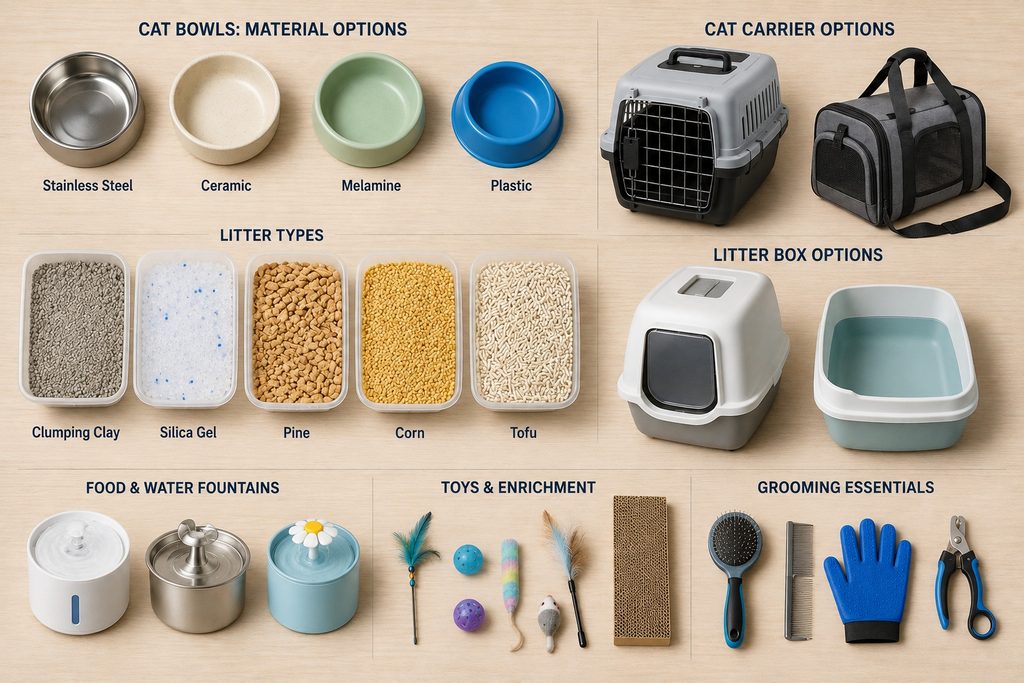
Size matters more than most buyers expect — a box at least 1.5 times your cat’s body length reduces the odds of avoidance later. Open boxes are generally preferable to covered ones; a hood traps odor inside more than it hides it from the room, and can make squatting and turning around harder for larger cats. On litter itself, unscented clumping litter is the safer starting choice — a fragrance owners find pleasant can be a reason a cat avoids the box entirely. It’s also worth checking dust level on the label: heavily dusty litters can irritate a cat’s respiratory tract with repeated exposure, and low-dust formulas exist specifically for this reason.
Feeding Supplies: Material and Shape Both Matter
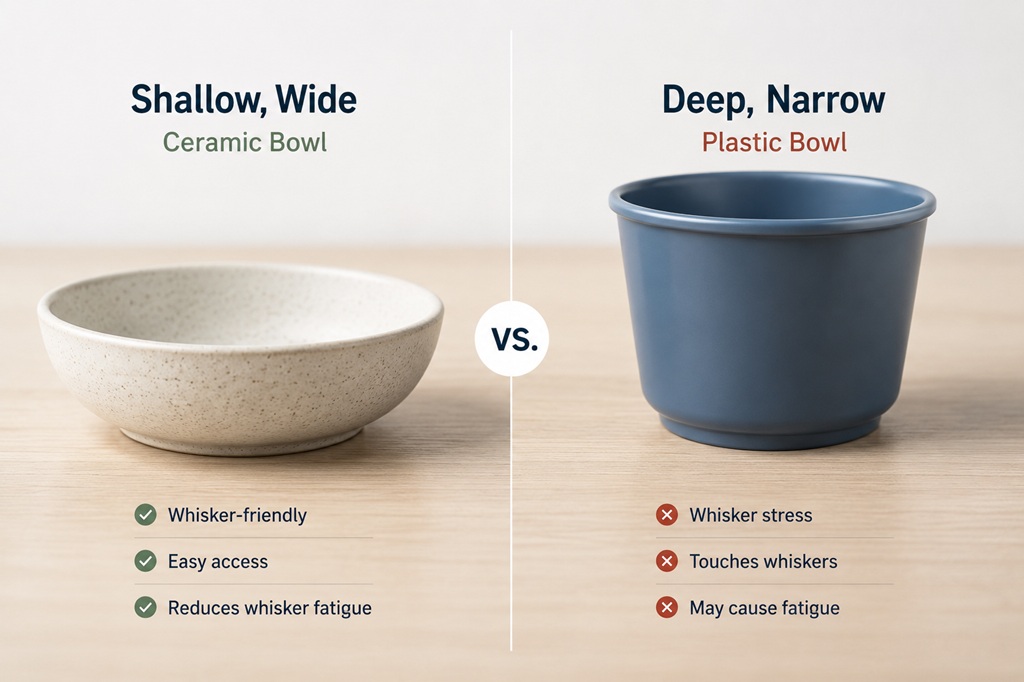
Many vets recommend steel, glass, or ceramic bowls over plastic, based on a long-standing clinical association between plastic surfaces and feline chin acne — though it’s worth being precise here: the mechanism isn’t fully proven scientifically, and some veterinary dermatologists note the evidence is more anecdotal than confirmed. It’s a reasonable precaution, not a guaranteed fix. Shape matters independently of material: a deep, narrow bowl that presses against a cat’s whiskers on every bite (sometimes called “whisker fatigue”) can discourage eating even from a perfectly clean bowl — wide and shallow is the safer default regardless of what it’s made of.
Bed and Resting Spots: Fit the Cat, Not the Trend
An enclosed, cave-style bed suits a cat who seeks security; an open, flat bed suits one who likes to sprawl and watch the room. Neither is objectively better — the tell is which existing spots your cat already gravitates toward, since that’s a better predictor than any product description.
Scratching Post: Stability Is the Feature That Gets Overlooked
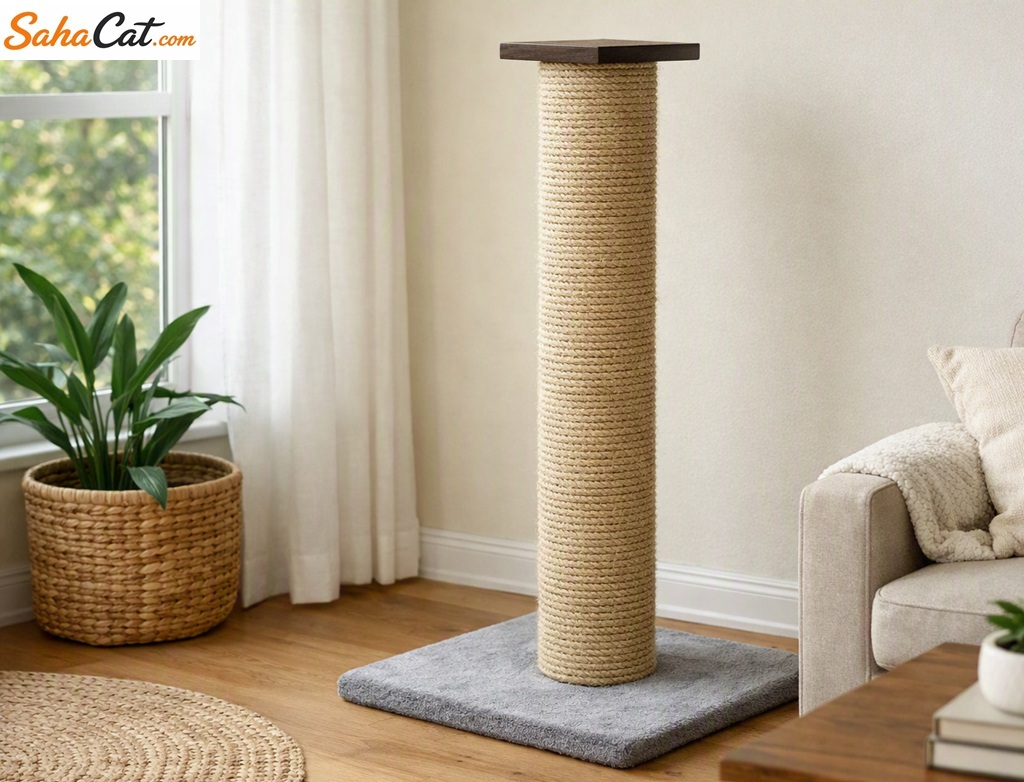
Height for a full stretch matters, and sisal rope or sisal fabric tends to hold up better than carpet-wrapped posts — a carpeted post can send the confusing message that carpet in general is fair game. The detail buyers miss most often is stability: a post that wobbles or tips during a hard scratch gets avoided fast, no matter how good the material is. It’s worth testing a post’s base stability in-store or checking reviews specifically for wobbling complaints before assuming taller automatically means better.
Carrier: Loading Design Matters as Much as Size
Size should let your cat stand, turn around, and lie down comfortably — but loading design is the detail most buying guides skip. A top-loading carrier, where the cat goes in from above rather than through a front door, tends to cause less struggle and stress than a front-loading design, particularly for a cat who already associates the carrier with the vet. Hard-sided carriers are typically easier to clean and more secure for car travel; soft-sided ones are lighter and easier to store, but check that the carrier itself can be properly secured with a seatbelt or strap rather than sitting loose on a seat.
Grooming Tools: Match the Tool to the Coat
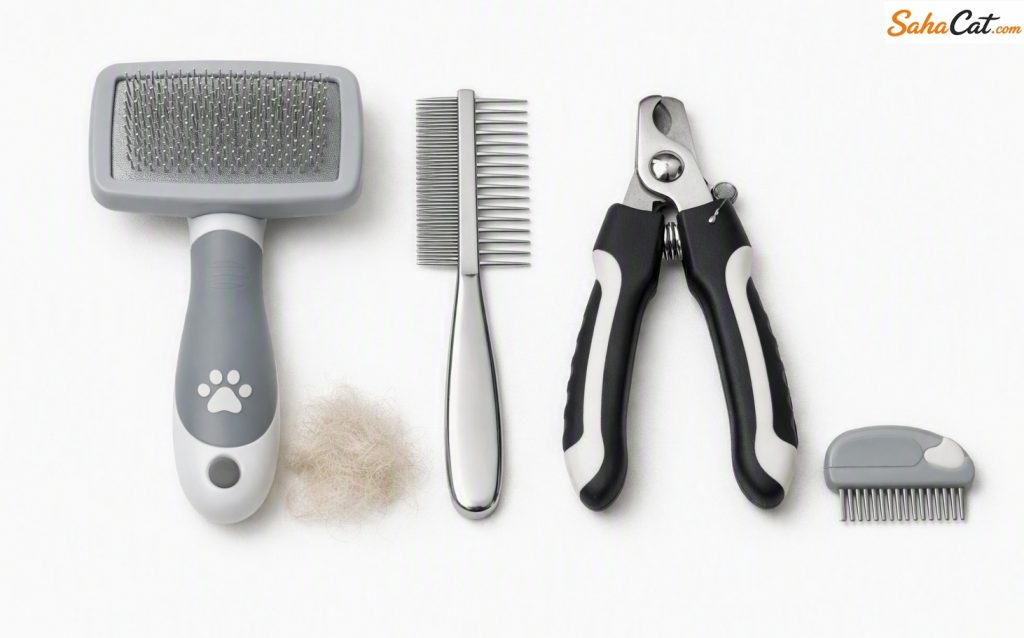
A slicker brush suits long-haired cats prone to matting; a rubber curry brush works better for short coats and doubles as a way to reduce loose hair before it ends up on furniture. Guillotine-style nail clippers tend to give a cleaner cut than scissor-style for most cat nails. A cat-specific toothbrush (or a finger brush for cats who won’t tolerate a bristled one) paired with cat-safe toothpaste matters more for long-term health than any brush choice, given how common dental disease is by early adulthood.
Toys and Enrichment: Safety Criteria Before Variety
Before variety, check for safety: no small parts that can detach and be swallowed, and treat string, ribbon, or feather-on-string toys as supervised-play items rather than ones left out unattended, given the real risk of linear foreign body injury if swallowed. Within those limits, a mix of wand toys for interactive play and a few solo toys for independent play covers most of what a cat actually needs, and rotating which ones are out at any time does more for sustained interest than buying new ones on a schedule.
Health and Safety Items: The Detail Most Guides Miss
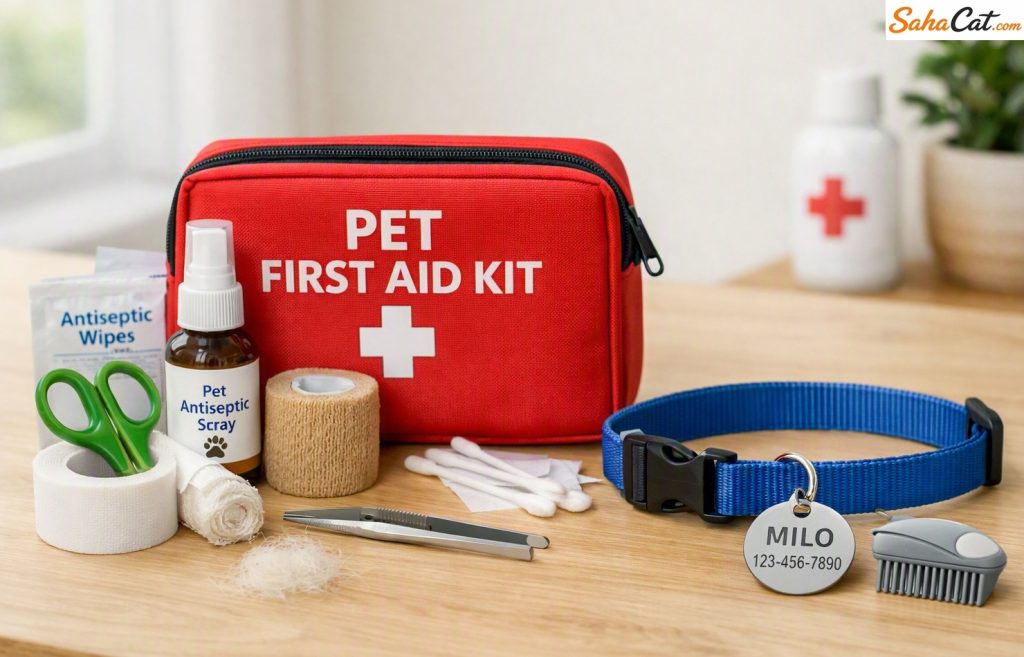
A basic first-aid kit (saline, gauze, styptic powder for a nail trimmed too short, your vet’s after-hours number written down) is worth having before an emergency, not during one. On identification: a breakaway or quick-release collar is the safer choice for any cat with outdoor access or who climbs — a standard buckle collar can catch on a branch or fence in a way a breakaway design releases from. Microchipping is worth discussing with your vet as a backup to a collar, but a chip only helps if its registration is kept current — an unregistered or outdated chip is close to having none at all.
Worth Adding Later, Once You Know Your Cat
- A cat tree or wall shelves, once you’ve seen whether your cat actually seeks height.
- A window perch, particularly for a cat who shows interest in outside activity.
- Puzzle feeders, especially useful for a fast eater or a cat left alone during the day.
- A heated bed, worth it for a cat who already seeks out warm spots.