
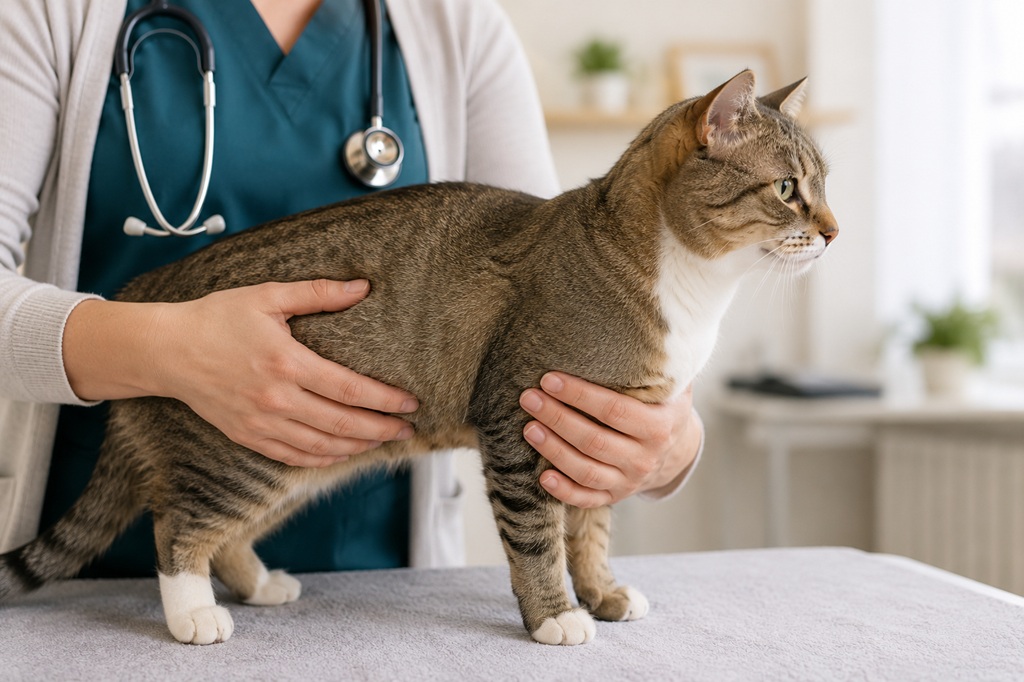
Here’s a statistic worth sitting with: according to the AVMA’s most recent pet ownership data, only 57.3% of cat owners visited a veterinarian in 2024, compared to 74.2% of dog owners — even though a similar share of both groups have a regular vet. Cats are quietly the more under-cared-for pet in the average American household, mostly because they hide illness well and rarely make the case for themselves the way a limping or vomiting dog does. These seven habits matter because they compensate for exactly that gap.

1. Get Her Actually Seen — Not Just “Have a Vet”
Having a regular vet and actually going are two different things, and the gap between them is where most preventable problems slip through. The most common reason cat owners skip visits, per AVMA survey data, is believing their cat isn’t sick — which is a hard signal to trust in a species built to mask illness as a survival instinct. An annual visit for an adult cat, or twice yearly for a senior, catches things like early kidney values or a subtle heart murmur well before symptoms show up on their own.
2. Learn to Read Her Weight, Not Guess It
Across recent studies, somewhere between 45% and 60% of cats are overweight or obese — and separately, national survey data has found that most owners of an overweight cat don’t identify their cat as overweight at all. This isn’t a failure of attention; a gradual gain over months is genuinely hard to notice day to day. A body condition score check — feeling for ribs under a slight fat layer, checking for a visible waist from above — takes thirty seconds at each vet visit and catches what a bathroom scale alone won’t, since a healthy weight range varies enormously by cat size and frame.
3. Match Her Water Intake to What She Actually Needs
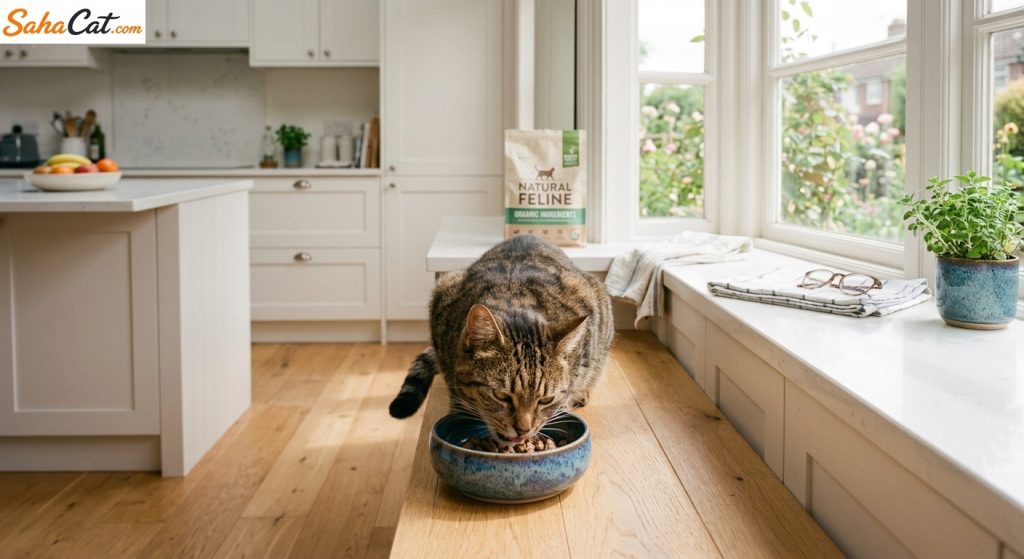
Cats descend from a desert-adapted species that gets much of its water from prey, and they don’t reliably make up for a low-moisture diet by drinking more on their own. A controlled study found cats eating wet food had meaningfully higher total water intake than cats on dry food alone, even accounting for extra drinking at the bowl. Our full comparison of dry and wet food goes into why this connects directly to urinary health, but the short version: if your cat eats dry food exclusively, a water fountain or a partial switch to wet food is one of the higher-leverage changes available.
4. Get the Litter Box Math Right
Box size, count, and placement affect litter box use more than the litter brand does. The standard guidance is a box at least 1.5 times your cat’s body length, one box per cat plus one extra, and boxes placed in more than one location rather than lined up together. Getting this wrong is one of the more common, and most fixable, causes of a cat avoiding the box entirely — which owners often misread as a behavior problem rather than an environmental one.
5. Give Her Something to Hunt, Not Just Something to Chase
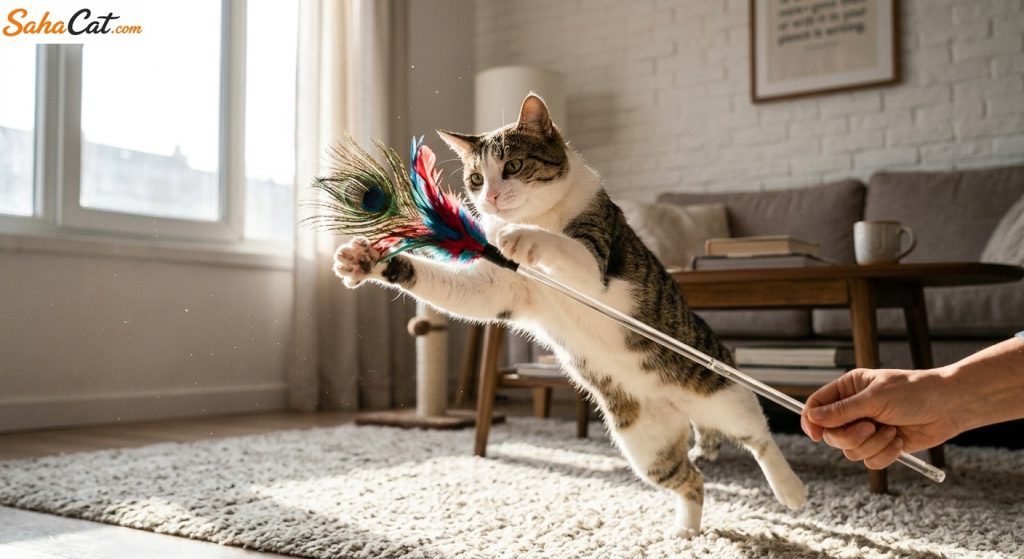
Cat play follows a real hunting sequence — stalk, chase, pounce, and a “catch” that lets the sequence resolve. A toy that only satisfies part of that, like an endlessly chased laser dot that can never be caught, can leave a cat wound up rather than settled. Our guide to indoor cat toys covers this in more depth, including why a toy that worked last month can suddenly stop working.
6. Don’t Dismiss Dental Care as Cosmetic
Periodontal disease affects a large share of cats by age three, according to the American Veterinary Dental College, and it’s easy to underestimate because cats rarely stop eating even when their mouths hurt. One myth worth retiring on its own: standard dry food does not meaningfully reduce this risk, per WSAVA’s own dental guidelines, despite how often that claim gets repeated. Regular brushing, or at minimum a VOHC-accepted dental product, does far more than food format ever will.
7. Read Her Stress Signals Before They Become Something Else
This is the tip that ties the others together, and it’s not just about mood. Chronic stress is directly linked to feline idiopathic cystitis (FIC) — the most common cause of the urinary symptoms covered in our article on urinary tract issues in cats — meaning environmental stress can turn into a real, diagnosable medical flare-up, not just an unhappy afternoon. Predictable routines, enough vertical space and hiding spots, and enough separated resources in multi-cat homes aren’t extras — for a stress-prone cat, they’re doing some of the same protective work as a medication would.
Sources: American Veterinary Medical Association, 2024 Pet Ownership and Demographics Sourcebook and related 2025 survey data; Blanchard T, et al., Journal of Feline Medicine and Surgery, 2025; Association for Pet Obesity Prevention (APOP), 2025 survey data; American Veterinary Dental College; WSAVA Global Dental Guidelines; Buckley CM, et al., British Journal of Nutrition, 2011.
This article is for informational purposes only and does not replace professional veterinary advice. If you notice a sudden change in weight, litter box habits, or behavior, a vet visit is the right next step, not a wait-and-see approach.