Bringing a kitten home is exciting, but the first month is also a period of rapid growth and adjustment. Your kitten is learning how to eat, use a litter box, interact with people, play safely, and feel secure in a new environment.
The right care depends heavily on the kitten’s age. A newborn kitten that is only a few days old has completely different needs from an 8-week-old kitten that has already been weaned.
This guide explains what to focus on during the first month, from feeding and warmth to litter training, socialization, veterinary care, and everyday safety.
Important: If you are caring for a newborn or orphaned kitten, the situation is more demanding than caring for a recently weaned kitten. Very young kittens can become dangerously cold, dehydrated, or hypoglycemic quickly. Veterinary guidance is especially important.
First, Find Out How Old Your Kitten Is
Age is one of the most important pieces of information when deciding how to care for a kitten.
A rough guide is:
Kitten age
What is generally happening
0–2 weeks
Eyes are opening; kitten depends heavily on its mother or caregiver
2–3 weeks
Increasing movement and awareness
3–4 weeks
Beginning to explore and transition toward weaning
4–6 weeks
Learning to eat more solid food and use a litter area
6–8 weeks
More active, playful, and increasingly independent
8+ weeks
Usually able to eat kitten food independently and adapt to a new home
The first three weeks are considered the neonatal period, and kittens have limited ability to regulate their body temperature during this time.
If you don’t know your kitten’s age, ask a veterinarian to estimate it rather than guessing.
Before Your Kitten Arrives: Prepare One Safe Room
A new kitten does not need access to your entire home immediately.
Start with a quiet, kitten-proofed room where the kitten can become comfortable before gradually exploring more of the house.
Set up:
A comfortable sleeping area
Food and water dishes
A low-sided litter box
Appropriate kitten litter
A few safe toys
A scratching surface
A hiding place
A carrier
A soft blanket
Safe areas for climbing and exploring
Keep food and water away from the litter box. Cats generally prefer their eating and toileting areas to be separated.
Kitten-proof the room
Look for hazards that a curious kitten could reach.
Secure:
Electrical cords
Small objects that could be swallowed
Toxic plants
Open windows
Gaps behind appliances
Loose strings and ribbons
Chemicals and cleaning products
Medicines
Plastic bags
Unsecured furniture
Two hazards deserve specific attention rather than a generic mention, given how serious and easy to overlook they are: true lilies (including Easter, Tiger, and Stargazer varieties) can cause fatal kidney failure from something as small as pollen on fur or a sip of vase water, and washing machines or dryers are a genuine, documented cause of injury and death for cats who climb in unnoticed — always check inside before starting a cycle. Our full guide to preparing your home before bringing home a new cat covers these and other specific hazards in more depth, and they matter just as much, if not more, for a small, exceptionally curious kitten.
Remember that kittens can squeeze into surprisingly small spaces.
Week 1: Help Your Kitten Feel Safe
The first week should be about stability rather than overwhelming your kitten with experiences.
Your kitten has just experienced a major change. New smells, sounds, people, animals, and surroundings can be stressful.
Give your kitten time to settle.
Create a predictable routine
Try to keep feeding, play, sleep, and cleaning around roughly the same times each day.
A predictable environment can help your kitten understand what to expect.
Spend quiet time sitting near your kitten. You don’t always need to pick them up or interact directly.
Sometimes simply being nearby is enough.
Let the kitten approach you
Avoid chasing a frightened kitten around the room or repeatedly pulling it out of a hiding place.
Instead:
Sit nearby.
Speak softly.
Allow the kitten to investigate you.
Offer gentle play.
Reward calm interaction with attention or an appropriate treat when age-appropriate.
The goal isn’t to force affection. It’s to teach the kitten that people are safe.
Feeding Your Kitten Correctly
Nutrition is especially important during kittenhood because kittens grow extremely quickly.
Growing kittens require more calories, protein, fat, vitamins, and minerals than adult cats, and they should eat food formulated specifically for growth.
If your kitten is already weaned
Choose a complete and balanced kitten food appropriate for growth.
Depending on age, kittens generally need several meals throughout the day. Merck Veterinary Manual recommends multiple daily feedings, with kittens under four months commonly fed around 3–4 times daily.
Follow the feeding instructions on the food package as a starting point, then adjust with your veterinarian based on your kitten’s growth and body condition.
Fresh water should always be available.
Don’t suddenly change the food
Find out what your kitten was eating before coming home.
If you want to change the diet, make the transition gradually rather than changing foods abruptly. This can make digestive upset less likely. Cornell also recommends continuing some of the kitten’s previous food while gradually introducing the new diet.
What About Newborn or Orphaned Kittens?
This is where kitten care becomes very different.
A kitten that has not been weaned should not simply be given regular kitten food or cow’s milk.
If the mother is available and healthy, mother’s milk is normally the best source of nutrition for newborn kittens. If the kitten is orphaned, a commercial kitten milk replacer designed for kittens is generally used instead.
Very young orphaned kittens may need feeding every few hours, particularly during the first week of life. Feeding frequency changes as the kitten grows.
Never rush bottle feeding
An improperly positioned kitten or excessively fast milk flow can cause aspiration, which can lead to serious respiratory problems.
VCA recommends feeding a bottle-fed kitten in a horizontal, head-neutral position and ensuring the nipple flow is slow.
If you have an orphaned newborn kitten, ask a veterinarian or experienced neonatal kitten caregiver to demonstrate feeding technique.
Warmth Is Critical for Very Young Kittens
Newborn kittens cannot regulate their body temperature effectively.
Merck notes that kittens remain unable to thermoregulate adequately until approximately four weeks of age.
This means a very young kitten needs a warm, safe environment.
However, heat sources can also cause burns or overheating.
Never place a tiny kitten directly against an extremely hot heating pad.
For orphaned neonatal kittens, ask your veterinarian how to create an appropriate warm environment for the kitten’s specific age.
A critical rule
Do not attempt to feed a chilled newborn kitten before it has been safely warmed.
Hypothermia can interfere with digestion and increase the risk of regurgitation and aspiration.
Monitor Your Kitten’s Weight
Weight is one of the most useful ways to monitor a young kitten’s progress.
Healthy neonatal kittens should gain weight steadily. Merck recommends daily weighing during the first two weeks, followed by weighing every three days until one month of age.
A small digital kitchen scale can be useful for very young kittens.
Record:
Date
Weight
Food intake
Urination
Defecation
Energy level
Any unusual symptoms
A simple notebook or spreadsheet can make changes much easier to notice.
Don’t focus on one number
Individual kittens vary.
The important question is whether your kitten is growing appropriately and remaining bright, active, and well hydrated, rather than whether it matches a single “perfect” weight.
If a young kitten stops gaining weight, loses weight, becomes weak, or refuses to eat, contact a veterinarian promptly.
Week 2: Introduce Gentle Handling and Exploration
Once your kitten is comfortable, gradually increase positive interaction.
Touch the kitten gently around:
Paws
Ears
Face
Tail
Body
Keep sessions short and calm.
This can help your kitten become more comfortable with routine handling later in life.
You can also introduce normal household sounds gradually.
For example, allow your kitten to hear:
Normal conversation
Television at a reasonable volume
Household activity
Gentle footsteps
Everyday noises
Don’t deliberately frighten the kitten with loud sounds.
The objective is familiarization, not flooding.
Week 3: Encourage Safe Play
Play becomes increasingly important as kittens become more coordinated.
Use toys that allow the kitten to chase, pounce, and investigate.
Good options include:
Small kitten-safe balls
Interactive wand toys used under supervision
Lightweight toys designed for cats
Scratching surfaces
Simple enrichment toys
Avoid allowing kittens to play with loose string, thread, ribbon, or similar objects without supervision. If swallowed, these materials can cause dangerous intestinal problems.
Don’t use your hands as toys
It may seem cute when a tiny kitten grabs your fingers.
But teaching a kitten that human hands are something to bite or attack can create problems later.
Use a toy instead.
Week 4: Encourage Independence
Around four weeks of age, kittens begin becoming much more mobile and curious.
This is also around the time the weaning process can begin for kittens that are still nursing.
If you’re caring for a kitten this young, don’t force the transition.
The exact process depends on whether the kitten is with its mother, orphaned, already eating independently, and how old it actually is.
A veterinarian can help you determine when and how to begin weaning.
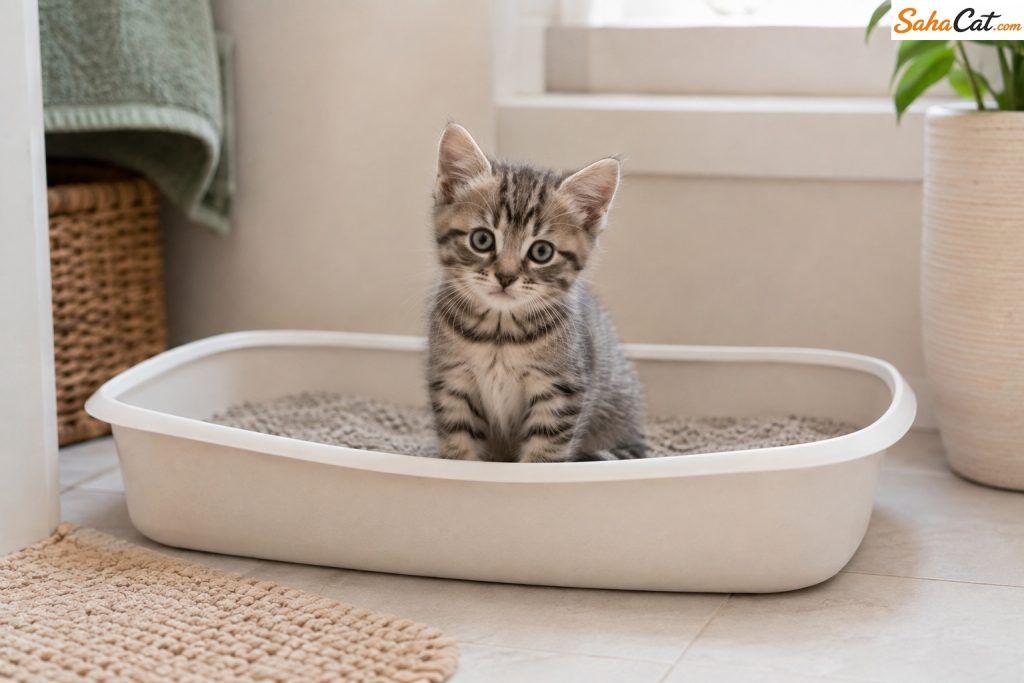
Litter Box Training
Many kittens learn to use a litter box naturally, but your setup can make the process easier.
Choose a box that is:
Easy for the kitten to enter
Large enough to turn around comfortably
Located somewhere quiet
Kept away from food and water
For a very young kitten, a low-sided box can make access easier.
Most cats prefer unscented litter with a relatively fine texture.
Keep the box clean
Scoop regularly and clean the box appropriately.
If your kitten suddenly stops using the litter box, don’t automatically assume it is a behavior problem.
Pain, illness, stress, or other medical problems can contribute to litter-box changes. Our full litter box training guide covers setup and troubleshooting in more depth.
Veterinary Care During the First Month
A veterinary examination should be one of your priorities after bringing home a kitten.
A veterinarian can assess:
General health
Weight and growth
Hydration
Eyes and ears
Mouth and teeth
Heart and lungs
Parasites
Vaccination history
Nutrition
Development
Cornell recommends having a new cat or kitten examined by a veterinarian as soon as possible after coming home. This first visit is also the standard time to test for feline leukemia virus (FeLV) and feline immunodeficiency virus (FIV), particularly important for a kitten of unknown background or history.
Kittens generally require veterinary visits every few weeks during early life because vaccinations and parasite care are given according to age and individual risk.
Vaccinations: Don’t Guess the Schedule
Kitten vaccination schedules depend on age, previous vaccination history, health, and local veterinary recommendations.
The commonly used FVRCP vaccine protects against feline panleukopenia, feline viral rhinotracheitis, and feline calicivirus.
Cornell notes that the initial FVRCP series generally begins around 6–8 weeks and is repeated at intervals until approximately 16–20 weeks of age.
Rabies vaccination timing depends on the vaccine and local regulations.
Your veterinarian should create the vaccination schedule rather than relying on a generic calendar found online — our full vaccination schedule guide covers the reasoning behind this timing in more depth.
Parasite Prevention Matters
Kittens commonly encounter intestinal parasites, and some parasites are particularly common in young cats.
Your veterinarian may recommend stool testing and age-appropriate parasite treatment.
Never use a flea or deworming product simply because it worked for another cat.
Some products are not appropriate for very young kittens.
Use only products that are specifically approved for your kitten’s age and weight and recommended by your veterinarian.
Socialization: Teach Your Kitten That the World Is Safe
The first weeks are an important period for social development.
Kittens learn from their mother, littermates, people, and their environment. Merck notes that human contact before approximately 10–12 weeks can help kittens become accustomed to living with people.
Positive experiences are more valuable than constant stimulation.
Introduce your kitten gradually to:
Different people
Gentle handling
Different safe surfaces
Normal household sounds
Carriers
Grooming
Nail handling
Appropriate toys
Always give the kitten the ability to retreat when overwhelmed.
Introduce the Carrier Early
Don’t wait until the first veterinary appointment to bring out the carrier.
Leave it open in the kitten’s room.
Put a comfortable blanket inside and allow your kitten to investigate it voluntarily.
You can occasionally place a toy or food reward nearby or inside when appropriate.
Over time, the carrier can become a familiar resting space rather than something that only appears before an unpleasant trip.
Grooming and Nail Care
Young kittens don’t need elaborate grooming routines, but early gentle handling can make future grooming easier.
Depending on your kitten’s coat, introduce:
Gentle brushing
Paw handling
Ear observation
Mouth observation
Nail handling
Keep sessions short.
If your kitten becomes frightened or struggles intensely, stop and try again later.
You want grooming to become a normal experience rather than a battle.
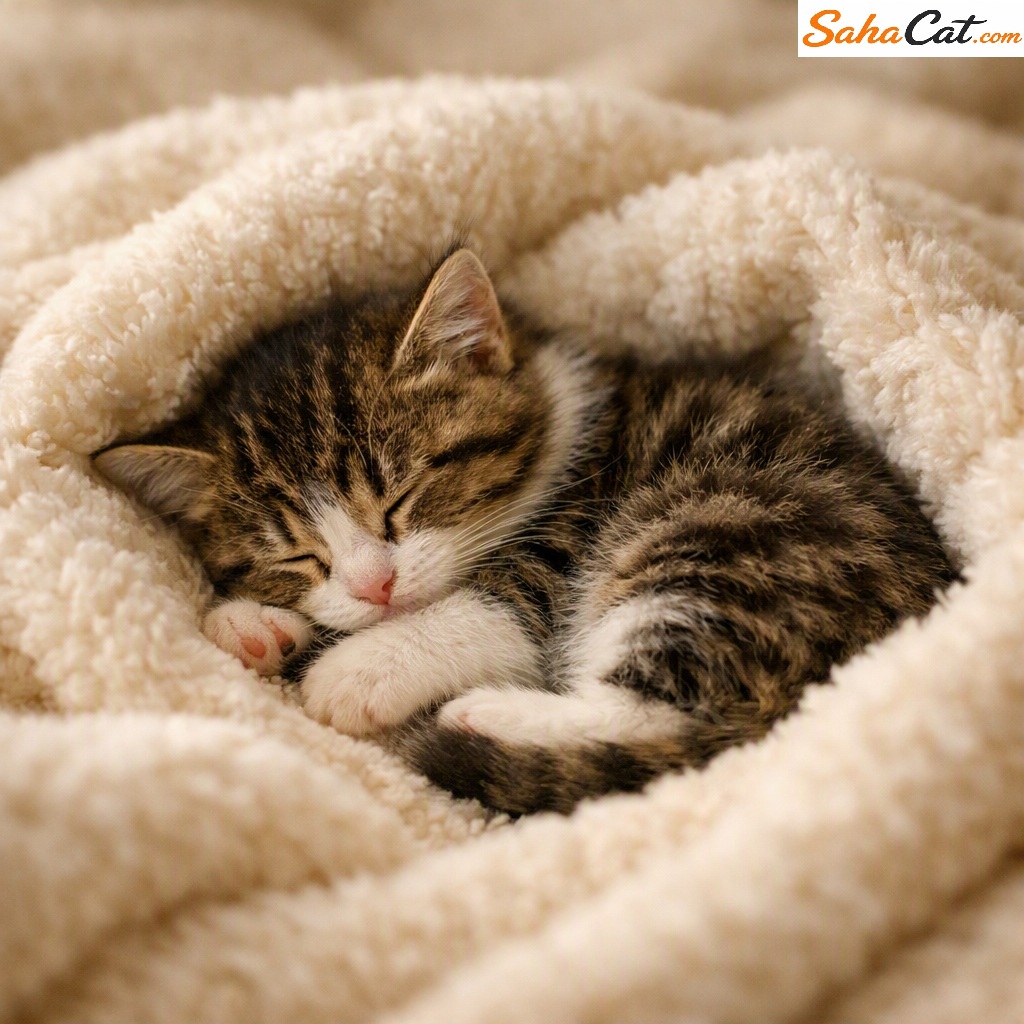
Sleep: Let Your Kitten Sleep
Young kittens spend a lot of time sleeping.
Don’t worry if your kitten alternates between short periods of energetic play and long periods of sleep.
Provide a warm, quiet, comfortable sleeping area.
However, there is an important distinction between normal sleepiness and unusual lethargy.
A healthy kitten should generally wake up, feed appropriately, and show periods of normal activity for its developmental stage.
A kitten that is difficult to wake, unusually weak, unwilling to eat, or suddenly much less responsive needs veterinary attention.
Watch for These Warning Signs
Kittens can deteriorate quickly, especially when they are very young.
Contact a veterinarian if you notice:
Refusing food
Repeated vomiting
Significant or persistent diarrhea
Failure to gain weight
Weight loss
Weakness
Severe lethargy
Difficulty breathing
Persistent coughing
Pale, blue, or gray gums
Significant dehydration
Abnormal eye discharge
Severe nasal discharge
Bloated or painful abdomen
Trouble urinating
Blood in vomit or stool
Seizures
Collapse
Difficulty breathing, collapse, severe weakness, seizures, suspected poisoning, or other serious abnormalities should be treated as emergencies.
It’s worth understanding why “refusing food” sits on this list at all, and why the safe window is shorter for a kitten than for an adult cat: kittens have a much higher metabolism and very limited fat reserves, which makes them considerably more vulnerable to a rapid, dangerous drop in blood sugar (hypoglycemia) if they stop eating, even for a relatively short stretch. This is exactly why kittens can decline so much faster than adult cats from what looks like a minor issue at first.
Don’t wait for a young kitten to “get better on its own” when something seems seriously wrong.
A Simple First-Month Routine
Here’s a practical routine for a recently weaned kitten.
Every morning
Check your kitten’s behavior and appetite
Refresh water
Feed an appropriate kitten diet
Scoop the litter box
Check the sleeping area
Spend a few minutes interacting calmly
During the day
Provide several opportunities for play
Offer age-appropriate meals according to your feeding plan
Give your kitten quiet time
Practice gentle handling
Introduce one new experience gradually
Every evening
Feed according to the kitten’s schedule
Clean the litter box
Check food and water
Have a short play session
Look over the kitten for anything unusual
Make sure the kitten’s sleeping area is safe
For very young or orphaned kittens, the schedule is much more intensive and may involve feeding and elimination care every few hours. Follow a veterinarian’s instructions for these kittens.
The First-Month Kitten Checklist
Use this as a quick reference:
Food
Complete kitten food
Appropriate feeding schedule
Fresh water
Gradual food changes
Health
Veterinary examination
FeLV/FIV testing
Vaccination plan
Parasite assessment
Weight monitoring
Emergency veterinary contact information
Environment
Safe room
Comfortable sleeping area
Kitten-proofed home, including lily and appliance safety
Food and water away from litter
Safe toys
Scratching surface
Training and socialization
Gentle handling
Litter-box introduction
Safe play
Carrier familiarization
Gradual exposure to household sounds
Positive interactions with people
Common Mistakes New Kitten Owners Make
1. Giving a kitten too much freedom immediately
A large house can be overwhelming.
Start small and gradually expand the kitten’s territory.
2. Feeding the wrong food
Kittens have different nutritional requirements from adult cats.
Use food formulated for growth rather than simply feeding whatever adult cat food is available.
3. Assuming milk is necessary
Cow’s milk is not a substitute for a kitten’s mother’s milk or a properly formulated kitten milk replacer.
4. Ignoring weight
Especially with young kittens, regular weight monitoring can reveal a problem before it becomes obvious.
5. Using medication without veterinary guidance
Never assume a medication or flea product is safe because it is safe for an adult cat.
Age and weight matter.
6. Overhandling a frightened kitten
Socialization should involve positive experiences, not forcing a kitten into situations it finds terrifying.
7. Waiting too long when a kitten becomes sick
Young kittens have limited reserves and can become seriously ill quickly.
What Should Your Kitten Be Able to Do by the End of the First Month?
This depends entirely on the kitten’s starting age.
A kitten that was newborn when you began caring for it will be at a very different developmental stage from an 8-week-old kitten adopted into your home.
For a recently weaned kitten, you should be working toward:
Eating an appropriate kitten diet independently
Drinking water
Using the litter box
Playing appropriately
Becoming comfortable with gentle handling
Sleeping safely
Becoming familiar with normal household sounds
Beginning a relationship of trust with its caregivers
Receiving appropriate veterinary care
The goal isn’t to make your kitten “perfect” after 30 days.
The goal is to establish healthy routines, safety, trust, nutrition, and veterinary care that will support the rest of its development.
Frequently Asked Questions
How often should I feed a kitten?
The answer depends on age. Young, weaned kittens generally need several meals per day, while neonatal kittens may need feeding every few hours. Kittens under four months are commonly fed 3–4 times daily, while orphaned neonates require a much more frequent schedule.
Can I give my kitten cow’s milk?
No. Cow’s milk should not be used as a replacement for a mother’s milk or commercial kitten milk replacer. If you’re caring for an unweaned kitten, speak with a veterinarian about the correct feeding method.
When should a kitten see a veterinarian?
A newly adopted kitten should generally receive a veterinary examination soon after coming home. Your veterinarian can establish the vaccination, parasite-control, nutrition, and follow-up schedule, and this first visit is also the standard time for FeLV/FIV testing.
When can kittens start eating solid food?
The transition toward solid food generally begins around 3–4 weeks of age, although the exact process varies. Orphaned kittens should be transitioned gradually and appropriately rather than being forced to eat solid food too early.
How do I know if my kitten is healthy?
Look for appropriate appetite, steady growth, normal activity for its age, clean eyes and nose, normal breathing, healthy-looking stool and urine, and normal interaction with its surroundings. A veterinarian is needed to properly assess your kitten’s health.
Should I keep my new kitten away from other cats?
If your kitten’s health and vaccination history are unknown, keeping it separated from other cats until a veterinarian has examined it — including FeLV/FIV testing — can reduce the risk of spreading infectious diseases.
Why can a kitten decline so quickly compared to an adult cat?
Kittens have a much higher metabolism and very limited fat reserves compared to adult cats, which makes them considerably more vulnerable to a rapid drop in blood sugar (hypoglycemia) if they stop eating, even briefly. This is why a 12-hour refusal to eat is treated as more urgent in a kitten than a similar gap would be in an adult cat.
Concluding Thoughts
The first month with a kitten is less about buying every possible product and more about getting the fundamentals right.
Feed the right food. Provide a safe environment. Keep your kitten warm when appropriate. Establish good litter habits. Encourage gentle socialization. Monitor growth. Arrange veterinary care. And pay attention when something seems wrong.
If your kitten is very young or orphaned, don’t try to manage everything from a generic online schedule. Neonatal kittens have specialized needs, and professional guidance can make a major difference.
A calm routine during these first weeks can give your kitten something even more valuable than toys or treats: a safe foundation for a healthy life with you.
Sources
Merck Veterinary Manual — Kitten Care
Merck Veterinary Manual — Management of the Neonate in Dogs and Cats
Merck Veterinary Manual — Proper Nutrition for Cats
Cornell Feline Health Center — Choosing and Caring for Your New Cat
Cornell Feline Health Center — Feline Vaccines: Benefits and Risks
Cornell Feline Health Center — Gastrointestinal Parasites of Cats
VCA Animal Hospitals — Feeding Orphaned Kittens
American Association of Feline Practitioners (FeLV/FIV testing guidance)