
Vaccinations protect your cat from serious, preventable diseases — but “get her vaccinated” only goes so far without knowing which vaccines, named specifically, and on what actual timeline. This is based on the 2020 AAHA/AAFP Feline Vaccination Guidelines, the primary reference most U.S. vets follow, cross-checked against the WSAVA’s 2024 update.
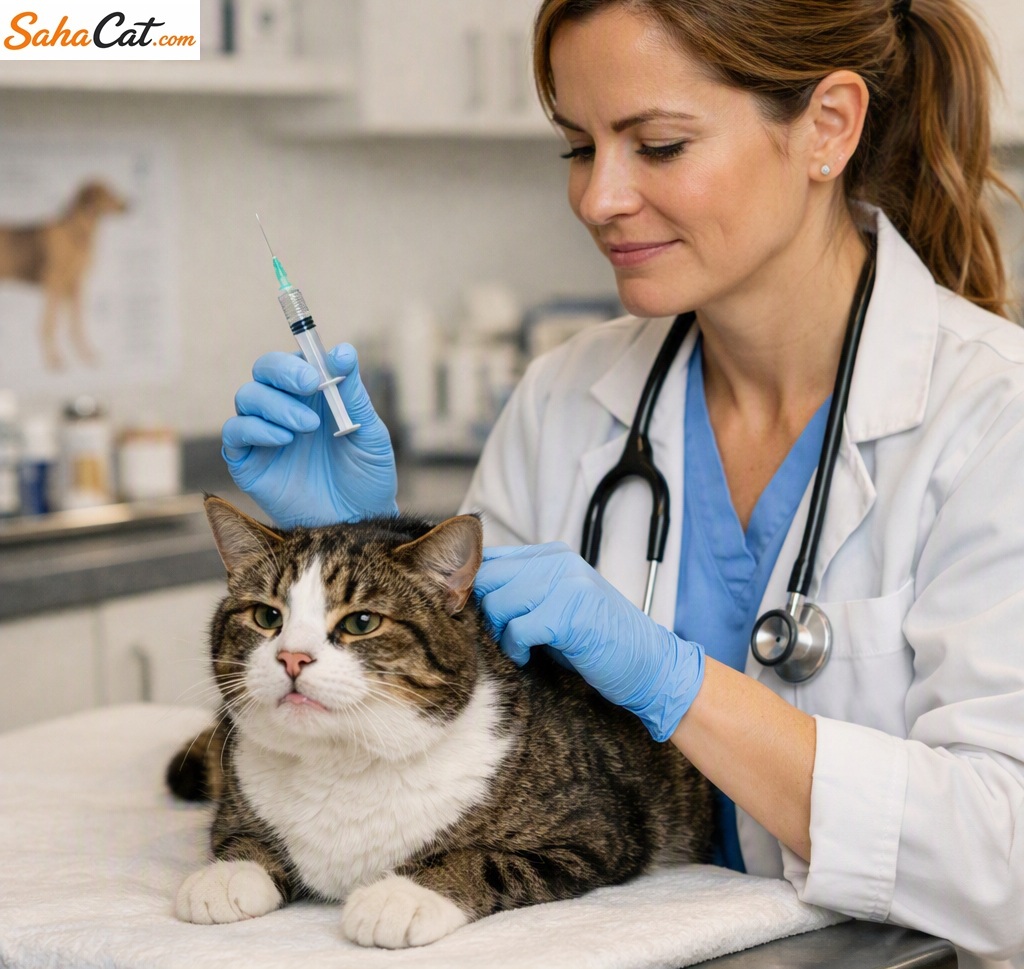
Core vs. Non-Core, Named Specifically
Core vaccines are recommended for essentially every cat, regardless of lifestyle, because they protect against widespread, serious diseases:
- FVRCP — a combination vaccine covering feline herpesvirus-1 (rhinotracheitis), calicivirus, and panleukopenia (feline distemper).
- Rabies — legally required in many jurisdictions, and a genuine public health concern since it’s transmissible to humans.
- FeLV (feline leukemia virus) — core specifically for kittens and cats under one year old, since young cats are considerably more susceptible. It becomes a non-core, risk-based vaccine for adult cats without ongoing exposure risk.
Non-core vaccines (Chlamydia felis, Bordetella bronchiseptica, and others) are recommended based on individual risk factors — outdoor access, multi-cat environments, or a shelter/boarding history — and your vet is the right person to weigh those against your cat’s actual situation.
Kitten Vaccination Schedule
Kittens need a multi-dose series specifically because maternal antibodies, absorbed from their mother’s first milk, can block a vaccine from working properly for a window of time that varies kitten to kitten:
- 6–8 weeks: first FVRCP dose.
- Every 3–4 weeks after that, continuing until at least 16–20 weeks of age: this is a real point worth correcting from older or looser schedules — stopping at 14–16 weeks isn’t necessarily enough. Studies cited in the guidelines suggest up to a third of kittens may still have interfering maternal antibodies even at 16 weeks, so the dose given at or after 16 weeks is considered the most important for lasting immunity, not just another routine booster.
- Rabies: a single dose, typically at 12–16 weeks or per local law where required.
- FeLV: a two-dose series for kittens, ideally after a negative FeLV test — both AAFP and WSAVA specifically recommend testing before vaccinating, since there’s no benefit to vaccinating a cat already infected.
- Booster after the kitten series: here’s a genuine update worth knowing — while a 1-year booster was standard for decades, the 2020 AAHA/AAFP guidelines adopted a recommendation for the FVRCP booster at 6 months instead, to close the immunity gap for kittens who didn’t fully respond to their final kitten-series dose. Many practices are transitioning to this; ask your vet which schedule they’re following.
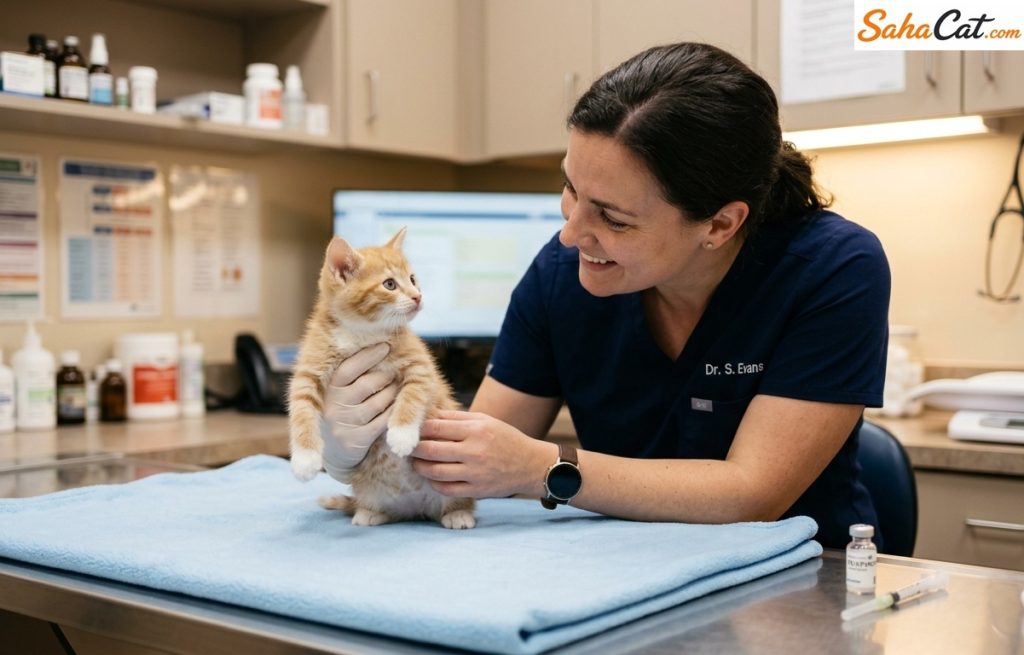
Adult Cat Vaccinations
After the kitten series and initial booster, FVRCP is typically given every 3 years for cats with no ongoing high-risk exposure. Rabies revaccination frequency depends on the specific vaccine label and local law — commonly every 1 to 3 years. FeLV shifts to non-core status for adult cats without regular exposure to unknown-status or FeLV-positive cats, but stays relevant for adults with real ongoing outdoor or multi-cat exposure. Regular wellness visits are the natural checkpoint to review what’s actually due rather than guessing from memory.
Do Indoor-Only Cats Still Need Vaccines?
Yes. Disease can still arrive through an open window, on clothing or shoes, during a boarding stay, or if your cat ever gets out unexpectedly. Core vaccines are considered essential regardless of lifestyle; non-core vaccines are where indoor-only status genuinely reduces the case for vaccinating.

Possible Side Effects
Most cats tolerate vaccines well — mild, short-lived lethargy, reduced appetite, or soreness at the injection site for a day or two is common and not a cause for concern. Serious reactions are rare. Contact your vet promptly for facial swelling, difficulty breathing, or repeated vomiting. On lumps specifically: it’s worth naming the actual concern rather than being vague about it — feline injection-site sarcoma (FISS) is a rare but recognized reaction, historically associated in particular with FeLV and killed rabies vaccines, which is part of why current guidelines recommend giving certain vaccines in specific distal-limb locations rather than between the shoulder blades — a location choice that isn’t arbitrary. Any lump at an injection site that’s still present or growing after a few weeks should be reported to your vet.
Cost Considerations
Costs vary by location, clinic, and which vaccines are included. Low-cost clinics and shelter vaccination events are a genuinely useful option for budget-conscious owners, and preventing disease through vaccination is reliably far cheaper than treating a serious illness that a core vaccine would have prevented.
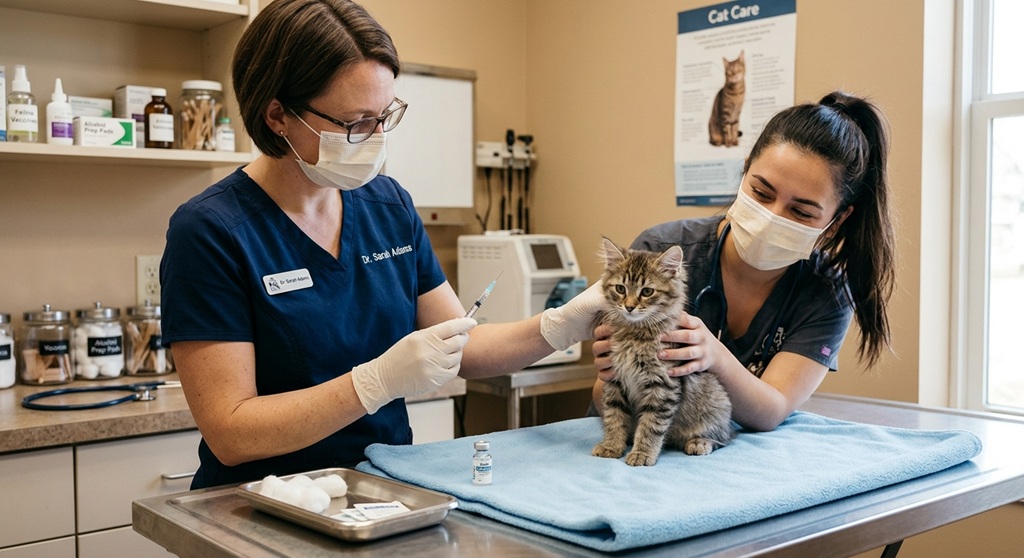
The Schedule Isn’t One-Size-Fits-All — But the Core Vaccines Mostly Are
Non-core vaccines, exact revaccination intervals, and rabies law specifics genuinely vary by cat and location — that part is legitimately individualized. But the core vaccines themselves (FVRCP, rabies, and FeLV for young cats) aren’t optional extras for most cats; they’re the baseline the rest of the schedule gets built around. Bring this to your vet as a starting framework, and keep a written record of what’s been given and when — it matters more than it seems until you need it for boarding, travel, or an emergency visit.
Primary source: Stone AE, et al. “2020 AAHA/AAFP Feline Vaccination Guidelines.” Journal of Feline Medicine and Surgery, 2020. Cross-referenced with WSAVA 2024 Vaccination Guidelines and AAHA’s public guideline resources.
This article is for informational purposes only and does not replace professional veterinary advice. Vaccine schedules should be individualized by your vet based on age, health status, lifestyle, and local law.