
Here’s the detail that reframes most meowing questions: adult cats rarely meow at each other. Feral and free-roaming cats communicate with other cats mostly through body language, scent marking, and a handful of other vocalizations — meowing, as an adult behavior, is aimed almost entirely at people. In other words, your cat isn’t using a universal cat language you happen to be overhearing. She developed this specific sound, or kept using a kitten sound into adulthood, because it works on humans. That’s worth knowing before trying to interpret any individual meow, because it means the behavior is inherently about getting a reaction from you — which is either completely benign or a useful diagnostic clue, depending on what changed.
What She’s Probably Saying, in Context
Tone and pitch matter less than most owners assume — context and body language carry more of the actual meaning:
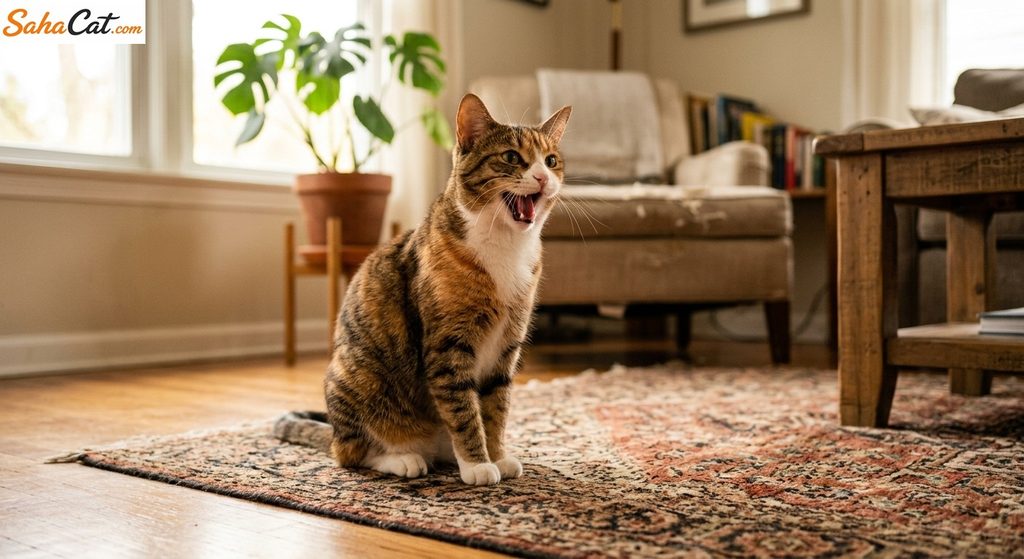
- Short, single meow at the door or when you enter a room: a greeting. Usually paired with a raised, relaxed tail. Doesn’t need a specific response beyond acknowledging her.
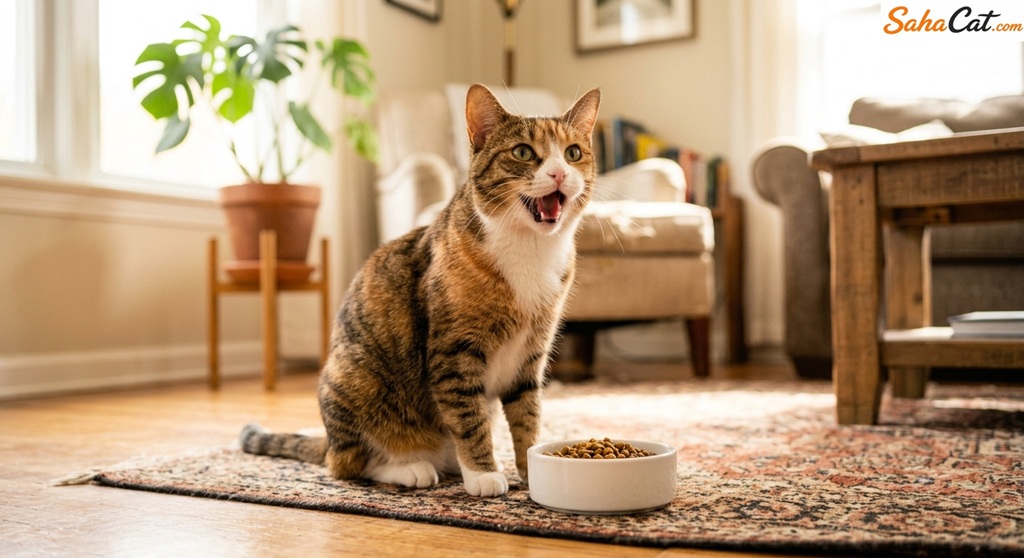
- Repeated meowing near mealtimes or when you sit down: a request, and typically a learned one. Cats are quick to notice which sounds get a response, so a meow that reliably produces food or attention will keep happening — not because she’s manipulative, but because it works.
- Yowling — louder and more drawn out than a meow: more often distress, mating behavior in an unneutered cat, or discomfort than a simple request.
- Chirping or trilling: usually a friendly greeting or attention-getter, and generally not something to worry about.
The Meowing That’s Actually Just Personality
Some cats are simply more vocal, and it isn’t a problem to fix. Siamese cats are the most commonly cited example of a naturally talkative breed, but individual temperament matters as much as breed — a chatty cat isn’t signaling distress just by being chatty. The distinction that actually matters is change, not volume: a cat who has always talked a lot doing more of the same is personality. A quiet cat suddenly vocalizing constantly is a change worth paying attention to.
When It’s a Learned Habit You’re Reinforcing
If a cat meows and gets fed, played with, or picked up every time, that pattern strengthens — it’s not a design flaw in the cat, it’s basic reinforcement. Feeding on a consistent schedule rather than the moment she meows, and giving attention on a routine rather than on demand, tends to reduce this over time. It won’t happen immediately; a behavior that’s been reinforced for months doesn’t fade in days.
What Changes When It’s Actually a Senior Cat
Increased vocalization in older cats gets attributed to “just getting older” more often than it should. Two specific, checkable causes are worth naming directly rather than leaving it vague:
- Hyperthyroidism — the most common hormonal disorder in older cats, and one of the more frequent medical causes of new or increased vocalization, especially at night. It typically comes with other signs: increased appetite, weight loss despite eating more, and increased thirst or activity. It’s diagnosed with a routine blood test and is treatable, which is exactly why it’s worth ruling out rather than assuming it’s simply age.
- Sensory decline or cognitive changes — reduced vision or hearing, or in some cats, cognitive dysfunction similar in presentation to dementia, can cause disorientation and vocalizing, particularly after dark when a cat with declining vision has less to orient by.
Both are reasons to call your vet rather than wait it out — one of them is a simple, treatable diagnosis that’s easy to miss if it’s assumed to be “just old age.”
Beyond Meowing: The Rest of the Vocabulary
- Purring: usually contentment, but cats also purr when in pain or distress, as a self-soothing response — so purring alone doesn’t rule out something being wrong.
- Hissing or growling: an unambiguous request for space, not an invitation to approach or comfort.
When to Actually Call the Vet
Skip the wait-and-see approach if you notice any of the following, since these are the patterns most likely to have a medical cause behind them rather than a behavioral one:
- A sudden increase in meowing with no obvious trigger — no new pet, move, or schedule change.
- Vocalizing that sounds distressed, or is paired with appetite changes, weight loss, or lethargy.
- New nighttime vocalization in a senior cat, especially if she seems disoriented.
- Vocal changes alongside reluctance to move, be touched, or use the litter box normally.
This article is for informational purposes only and does not replace professional veterinary advice. If your cat’s vocalization has changed noticeably, a vet visit — including basic bloodwork for a cat over roughly eight years old — is the most reliable way to find out why.
Last reviewed: September 2026