
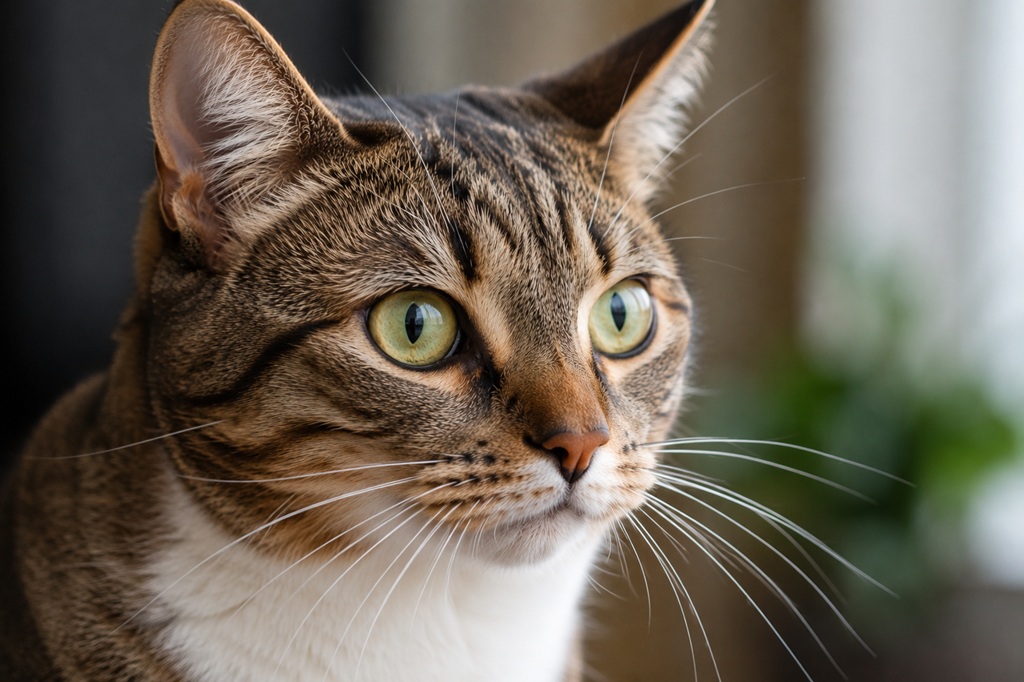
Cats communicate constantly through posture, tail, ears, eyes, and whiskers — but reading any one of these in isolation is where most misunderstandings happen. Some of those misreadings are just confusing. One of them is the leading cause of cat bites owners don’t see coming.
The Misreading That Causes the Most Bites: The Belly Trap
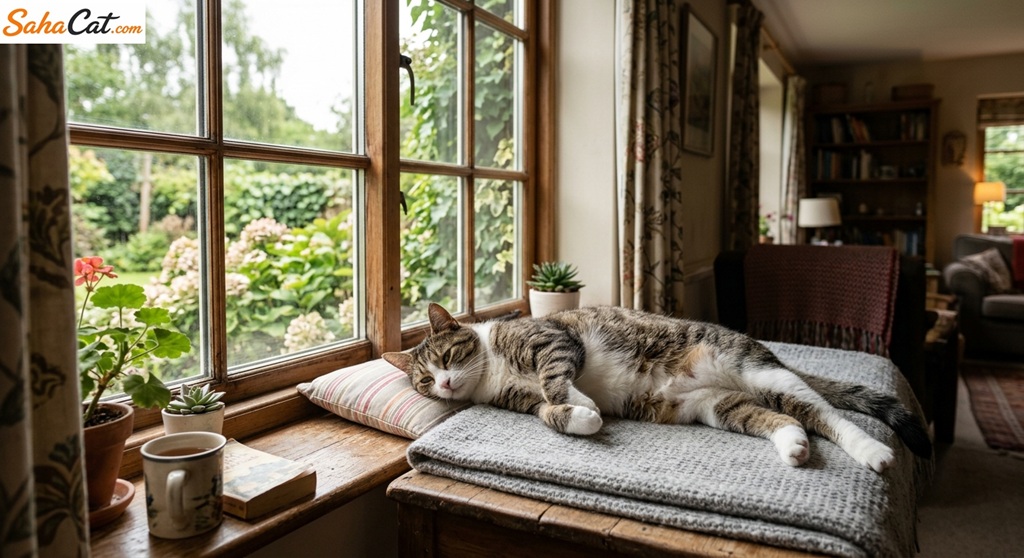
A cat rolling onto her back and exposing her belly is a genuine trust signal — it’s a vulnerable position, and she’s choosing to be in it around you. Where this goes wrong is assuming it’s an invitation the way it often is with dogs. Most cats don’t want their belly touched at all; the fur there is thin and the skin is far more sensitive, and a hand reaching in can trigger a fast, reflexive grab-and-bite even from an otherwise easygoing cat. Read the exposed belly as “I trust you enough to be vulnerable here,” not as “please touch.”
Reading the Whole Cat, Not One Signal
Tail, ears, eyes, and whiskers each carry part of the picture — the combination is what actually tells you something reliable:
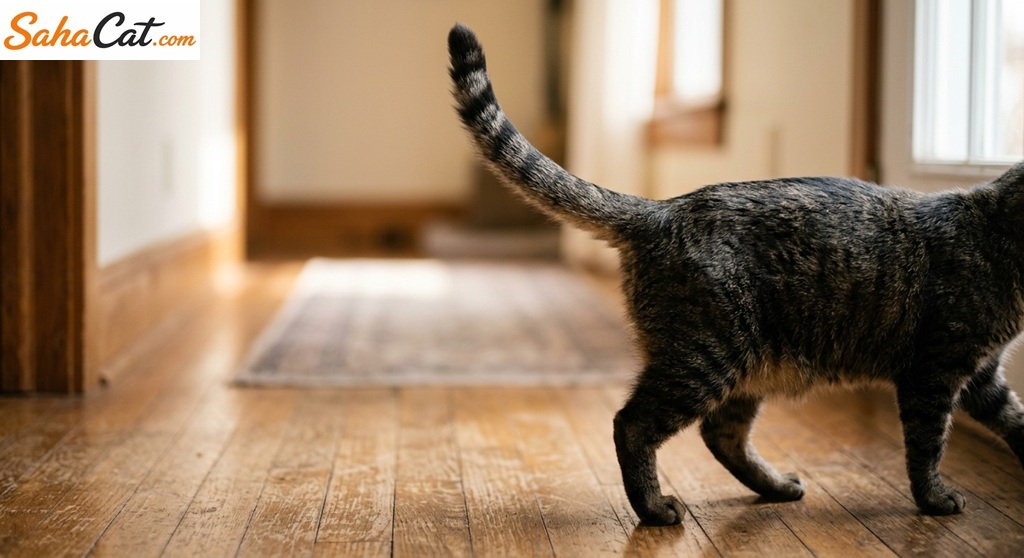
- Tail: upright with a slight curve at the tip signals confidence; puffed up (often with an arched back) signals fear; slow swishing suggests focus or mild irritation depending on context; rapid flicking or thumping means overstimulation and a cue to back off; wrapped around herself or another cat signals comfort and affiliation.
- Ears: forward and relaxed means content or curious; rotated sideways or slightly back suggests alertness or mild concern; flattened against the head is a clear fear or defensive signal.
- Eyes: a slow blink is a widely recognized trust signal — slow-blinking back tends to be well received. Dilated pupils can mean excitement, fear, or overstimulation depending on context; narrowed, focused pupils often show up during play or hunting-mode interest.
- Whiskers — a signal most guides skip entirely: forward and fanned out means curiosity or hunting focus; held loosely to the sides means relaxed; pulled back tight against the face signals fear, stress, or pain. Whiskers and ears tend to move together, so a mismatch between them (whiskers back, ears still forward) is often an early warning before a fuller reaction shows up. It’s also worth knowing that a cat’s whiskers are a genuine sensory organ, not decoration — they should never be trimmed.
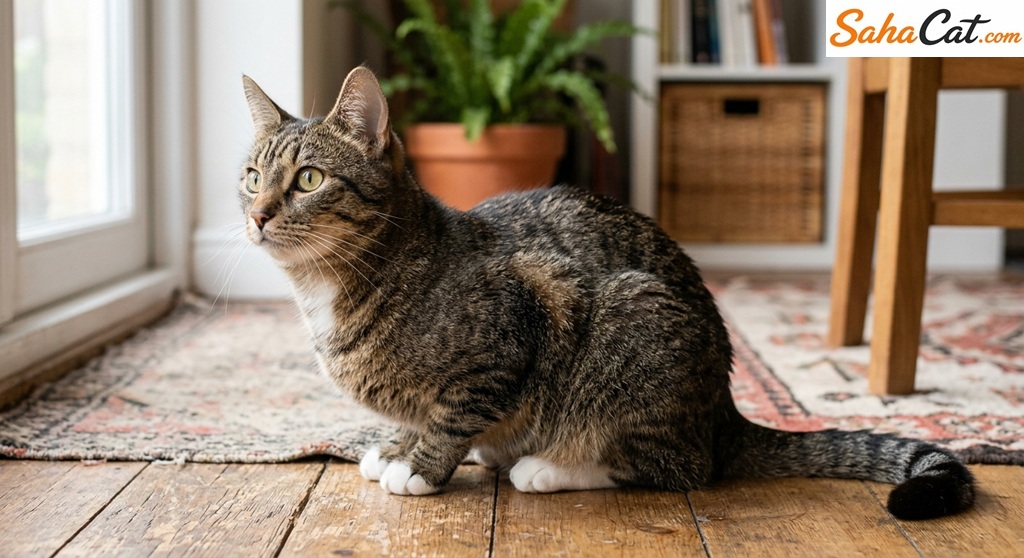
Body Posture, in Context
- Loose body, lying on her side or back: comfort and trust in her surroundings.
- Crouched low with tense muscles: fear, or readiness to flee or defend.
- Arched back with raised fur: a defensive display meant to look bigger and more intimidating.
The Affiliative Signals Most Owners Never Learn to Read
Body language isn’t only about fear and confidence — cats have a whole separate vocabulary for bonding that’s easy to overlook because it looks like ordinary behavior. Cheek rubbing against you or furniture (bunting) deposits scent from facial glands and is a genuine affiliative and territorial-marking signal, not just a cat being affectionate for no reason. Kneading — the rhythmic paw-pushing some cats do on a lap or blanket — traces back to nursing behavior in kittens and generally signals contentment. Both are worth recognizing as communication in their own right, not just cute habits.
Calm and “Shut Down” Can Look Similar — They Aren’t the Same
This is a distinction most body language guides skip. A relaxed cat has loose muscles, soft eyes, and responds to touch or sound around her. A cat under chronic stress can sometimes go still in a way that superficially resembles calm — minimal movement, a low, tucked posture, reduced responsiveness — but it isn’t relaxation, it’s closer to shutting down because escape or defense hasn’t worked. The practical difference: a calm cat can be gently roused into normal interest or play; a shut-down cat stays flat and unresponsive even to things that would normally interest her. If a cat who used to react to toys, food, or attention becomes persistently still and hard to engage, that’s worth paying attention to as a possible stress signal, not simply “she’s just mellow now.”
Signals Worth Combining, Not Reading Alone
A puffed tail plus flattened ears is unambiguous fear or defensiveness. An upright tail plus relaxed ears approaching you is friendly and confident. Purring is usually contentment, but cats also purr when in pain or distress as a self-soothing response, so purring alone doesn’t rule out something being wrong — check it against everything else she’s showing, especially appetite and energy.
When It’s a Baseline Change, Not Just a Mood
A single stress signal in a stressful moment — a vet visit, a loud noise, an unfamiliar guest — is normal and expected. What’s more worth noticing is a change in a cat’s usual pattern: a normally confident, tail-up cat who starts hiding more, a typically affectionate cat who becomes avoidant, or the calm-versus-shut-down distinction above showing up more often than it used to. That kind of shift is a better reason to check in with your vet than any single signal in isolation, since it’s the change itself — not the behavior on its own — that tends to matter most.
For Cat Owners
Understanding your cat’s body language is not about achieving a perfect translation of every flick of the tail or twitch of the ear. It is about building a deeper, more empathetic relationship with your feline companion. By learning to read the signals they are constantly sending, you can better meet their needs, prevent misunderstandings, and strengthen the unique bond you share. The next time your cat communicates with you, you’ll have a better chance of understanding what they’re saying.