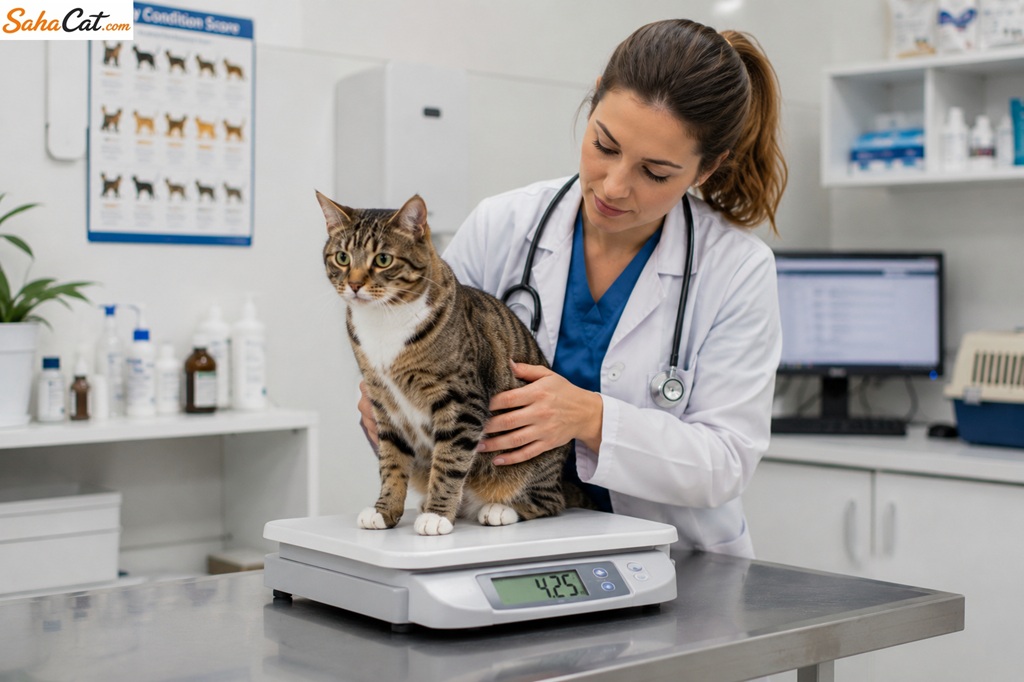
Run your fingertips along your cat’s ribcage right now. You should feel the ribs easily under a thin layer of fat — not have to press hard to find them, and not see them sharply either. That thirty-second check, part of what veterinary nutritionists call a Body Condition Score (BCS), catches nutrition problems earlier than waiting for the more obvious signs below, because cats are unusually good at masking discomfort until a problem has already progressed.
Finishing the Body Condition Check
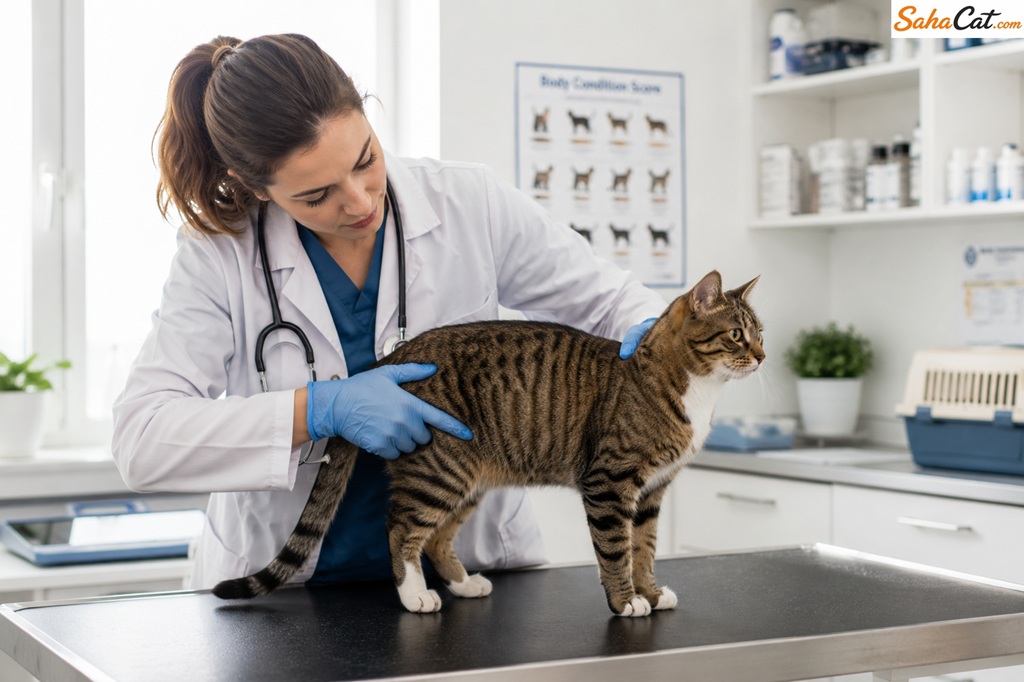
Ribs are step one. Two more checks, popularized by groups like the World Small Animal Veterinary Association (WSAVA) and taught at veterinary schools including Cornell, round out the picture:
- Waist, from above: Looking straight down at your cat, there should be a gentle inward curve behind the ribs. A flat or bulging silhouette suggests excess weight.
- Abdominal tuck, from the side: Her belly should angle upward slightly from ribcage to hind legs. A soft, saggy pouch low on the belly is normal in many cats — don’t mistake that for an overweight abdomen.
Two or three of these checks pointing the same direction — too thin, or carrying excess fat — is a more reliable signal than a scale number alone, and worth mentioning at your next vet visit even before anything else on this list shows up.
A Dull Coat Is Often the First Warning
Skin and coat are metabolically expensive for the body to maintain, which is exactly why nutrient shortfalls tend to show up there before anything more serious becomes visible. A coat that’s gone dry, dull, or coarse — or that’s thinning in patches or regrowing a noticeably different shade — points to a diet that isn’t delivering what it should. A single off day isn’t a red flag; a coat that stays off for more than two or three weeks is.
Weight Loss Is Riskier Than Weight Gain — Here’s Why
Both directions matter, but for different reasons. Weight loss despite a normal or increased appetite often signals that the diet isn’t meeting caloric needs, or that an underlying condition — hyperthyroidism, diabetes, intestinal disease — is interfering with nutrient absorption. There’s a specific danger worth knowing: a cat, especially an overweight one, that eats very little or nothing for several days is at real risk of hepatic lipidosis (“fatty liver disease”), where the liver becomes overwhelmed trying to process rapidly mobilized body fat. This is why any cat that stops eating for more than 24 hours needs a same-day vet call, not a wait-and-see approach — and why a sudden, unsupervised diet is a bad idea even for a cat who could stand to lose weight.
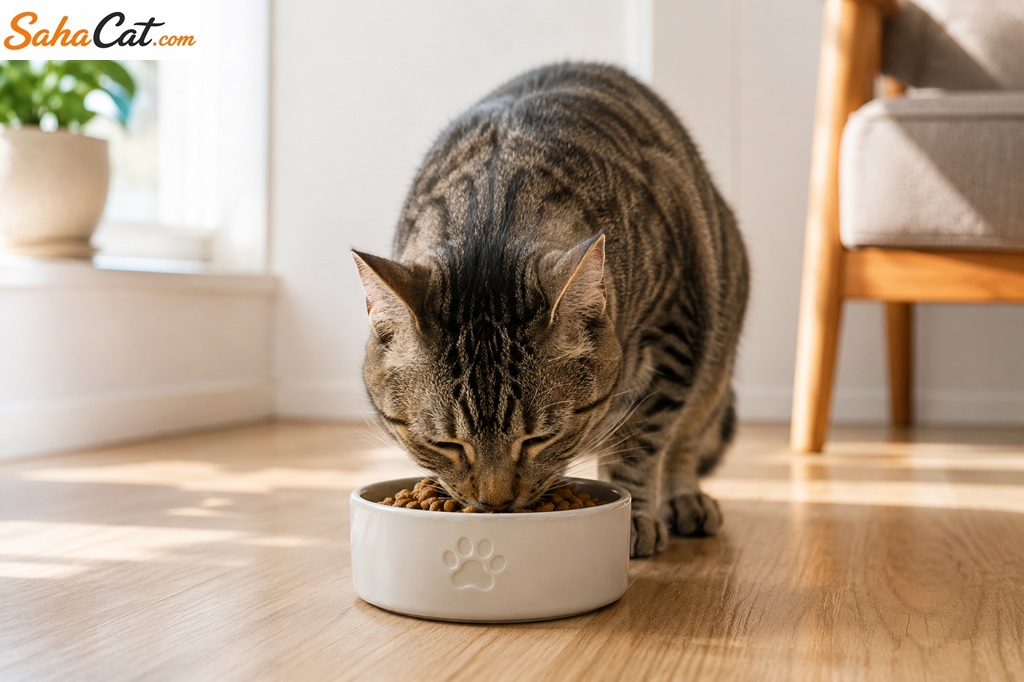
Weight gain, in contrast, is usually a portion problem rather than a food-quality one. Cats fed measured portions on a schedule are far easier to keep at a healthy weight than cats grazing on free-fed dry food all day.
Energy and Behavior Shifts
Inadequate nutrition can show up as consistently lower energy, less interest in play, or withdrawal — but some cats become more irritable or clingy rather than sleepy, so the signal is behavior change in either direction, not a specific mood. Because lethargy overlaps with dozens of unrelated conditions (pain, dental disease, anemia, thyroid problems), treat it as one data point to weigh alongside the physical checks above, not a standalone diagnosis.
Digestive Symptoms and Muscle Loss
Chronic diarrhea or vomiting that lasts more than a couple of days — especially if it tracks with a particular food — points to a diet that doesn’t agree with your cat, whether from poor-quality ingredients, an intolerance, or an imbalanced formulation. Muscle loss is easier to miss: a more prominent spine or hip bones, even in a cat who isn’t underweight overall, signals inadequate quality protein or an illness affecting how her body uses nutrients. It’s one of the things a vet checks for by hand during a physical exam precisely because a coat can hide it.
Four Dietary Mistakes Behind Most of This
- Homemade diets without veterinary formulation. Taurine — an amino acid cats can’t synthesize enough of on their own — along with calcium and certain B vitamins are easy to under-deliver in a diet that looks reasonable by human standards.
- Too much liver. Nutrient-dense, but frequent large amounts can cause vitamin A toxicity over time.
- Fish-heavy diets. Feeding mostly fish can contribute to thiamine (vitamin B1) deficiency, which affects the nervous system if it continues long enough.
- Portions that don’t match the cat. Using a generic bag guideline instead of amounts scaled to her actual weight, age, and activity level is probably the single most common and most fixable cause on this list.
What to Bring to the Vet Visit
Don’t try to diagnose or fix a suspected nutrition problem by switching foods repeatedly on your own — that can mask symptoms or introduce new ones. Instead, walk in with specifics: which signs you’ve noticed and for how long, her current food (brand, wet or dry, exact daily amount), and any treats or recent changes. Ask for a body condition score as part of the exam rather than just a weight-in-kg number, so you have a baseline to track against next time.
Sources consulted: Cornell University College of Veterinary Medicine (Feline Health Center); World Small Animal Veterinary Association (WSAVA) Nutrition Committee, Body Condition Score guidance; VCA Animal Hospitals, “Body Condition Score in Cats.”
Last reviewed: September 2026