

Scratching posts aren’t interchangeable, and the difference between a post your cat ignores and one she uses every day usually comes down to a handful of concrete product decisions — material, orientation, stability, and price tier. This guide covers exactly what to look for before you buy, not just how to encourage the behavior once you own one.
Types & Materials: What You’re Actually Choosing Between
Every scratcher on the market is built around one of a handful of core materials, and each comes with real trade-offs — not just a texture preference:
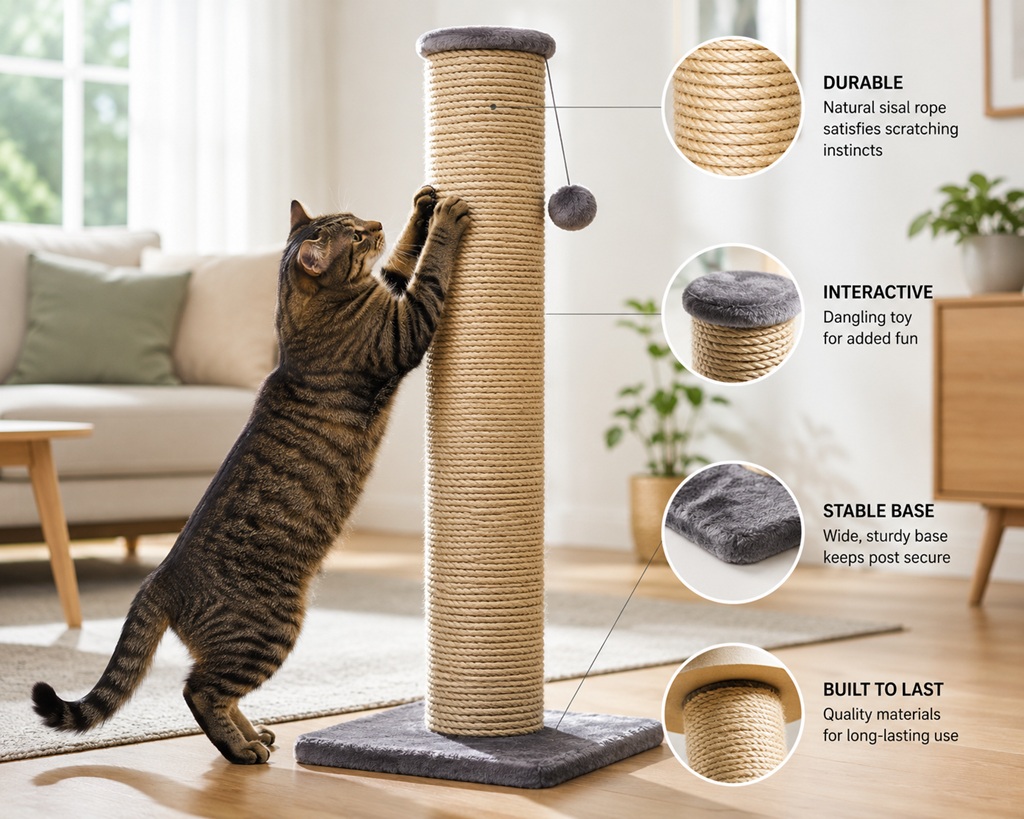
- Sisal rope — the material wrapped tightly around most tall cat trees and posts. Durable, holds up to aggressive scratching, and gives claws real resistance to pull against. Over time, loose fibers will fray and shed visibly; this is normal wear, not a defect, and it’s part of why a well-used sisal post looks rough rather than a sign it needs replacing.
- Sisal fabric — a woven, flatter version of sisal, often used on flat or angled scratchers. Slightly less aggressive-feeling under the claws than rope, and typically cheaper.
- Corrugated cardboard — inexpensive and often surprisingly popular with cats, but it’s a consumable, not a one-time purchase. Expect to replace a well-used cardboard scratcher every few months rather than treating it as a permanent fixture, and factor that ongoing cost in when comparing it to a pricier but longer-lasting sisal option.
- Carpet — visually blends into a home, but it’s worth knowing the trade-off directly: a carpet-covered post can send a confusing message that household carpet is fair game, since the texture is nearly identical. If you have wall-to-wall carpet at home, sisal or cardboard sidesteps this ambiguity entirely.
- Wood or bark — less common, but appealing to some cats for its rougher, more natural texture. Durable, though typically found on higher-end or specialty scratchers rather than budget options.
There’s no universally “best” material — the fastest way to pick correctly is matching the material to what she already scratches at home (see “What to Look For,” below).
What to Look For Before You Buy
- Height, for vertical scratchers: she should be able to fully extend upward without reaching the top. A post that’s too short cuts the stretch short — measure roughly 1.5x her body length as a starting benchmark, similar to the sizing logic used for litter boxes.
- Stability: the single most under-checked spec. Press down firmly on a post in-store, or check reviews specifically for wobbling complaints online — a base that shifts or tips under real weight gets abandoned fast, regardless of how good the material is.
- Orientation: vertical posts, horizontal pads, and angled/ramp-style scratchers all exist because cats genuinely differ in preference. If you don’t already know your cat’s preference, a horizontal cardboard scratcher is the cheapest way to test before committing to a taller, pricier vertical post.
- Base footprint and weight: a wider, heavier base resists tipping better than a tall, narrow one — this matters more than height once a cat is putting her full weight into a scratch.
- Non-toxic materials and dyes: relevant mainly for painted or dyed wood/carpet scratchers, since cats can occasionally chew or lick surfaces they interact with often.

What You’re Actually Paying For at Each Price Tier
- Budget (roughly $10–20): typically a flat or slightly angled cardboard scratcher, or a small single sisal-wrapped post. Fine as a first test of your cat’s preferences, or as a secondary scratcher in a multi-cat home, but often shorter and less stable than mid-tier options.
- Mid-range (roughly $30–60): a taller, more stable sisal post, often with a wider base or a small platform. This tier is usually where stability stops being a gamble — worth the jump if a budget post has already been rejected for wobbling.
- Premium (roughly $100+): multi-level cat trees combining scratching with climbing, perching, and hiding spots. You’re paying for the additional features and often genuinely better build quality, not just a taller scratching surface — if scratching is the only feature you need, a mid-range post delivers most of the core benefit for a fraction of the price.
Where to Place It
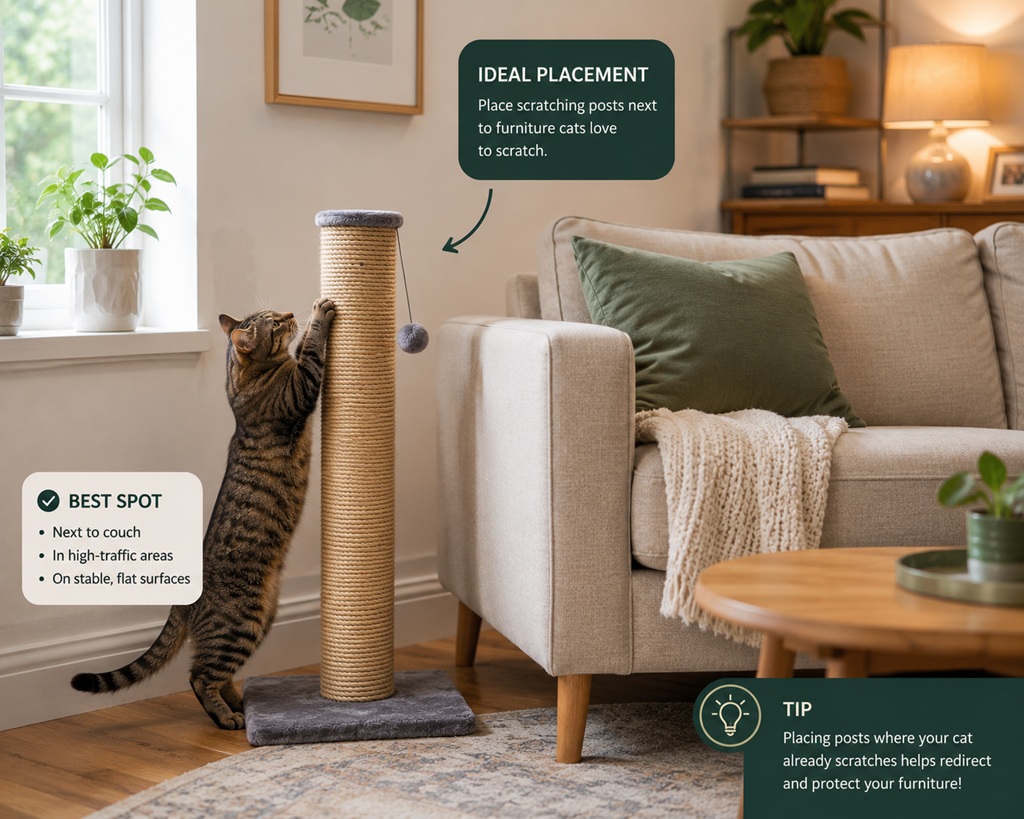
Placement affects whether a scratcher gets used more than almost any other single factor. The short version: put it where your cat already wants to scratch, not where it looks best in the room — directly beside furniture she’s currently targeting, or near her favorite resting spot, since cats often stretch and scratch right after waking. A scratcher hidden in an unused room competes poorly against the sofa in the middle of your living room. For the full reasoning behind why location matters this much — and how to shift a scratcher’s position gradually once she’s using it consistently — see our companion guide on why cats scratch furniture.
Quick Tips to Get Her Using It From Day One
- Sprinkle a small amount of catnip on a new scratcher to encourage initial investigation — it won’t fix a post with the wrong material or orientation, but it helps her notice it exists.
- Reward voluntary use with praise or a treat rather than physically placing her paws on it, which can create a negative association instead of a helpful one.
- Don’t discard a shredded post too early — visible wear is often a sign she likes it, not a sign it’s failed.
- If she ignores it after a week, change one variable at a time — location first, then material, then orientation — rather than replacing the whole thing at once.
For the deeper behavioral troubleshooting — what to do if she’s already scratching furniture, how to redirect an established habit, and what a sudden change in scratching behavior might mean — see our full guide, Why Cats Scratch Furniture and How to Prevent It.
The Buying Decision, Simplified
If you’re choosing your first scratcher: start with an inexpensive horizontal cardboard scratcher to learn her orientation preference, then invest in a taller, more stable sisal post once you know what she actually favors. Skip the premium cat tree unless you also want the climbing and perching features — you’re paying for those, not for better scratching.
Last reviewed: 7 September 2026.