
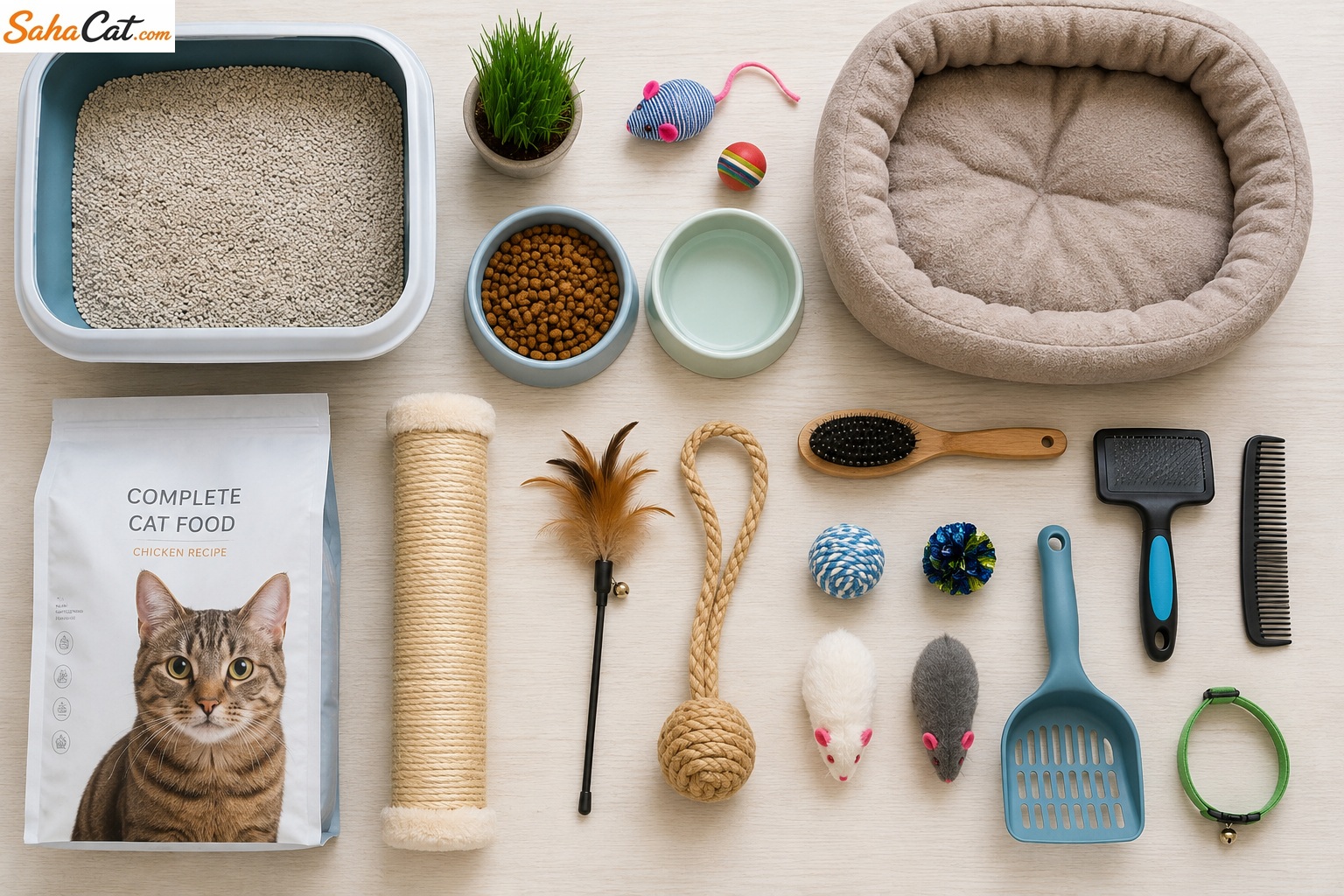
Most “essential supplies” checklists give you the same 20-something items whether you’re bringing home an eight-week-old kitten or an adult cat from a shelter, and whether you have one cat or three. That flattens a decision that actually depends a lot on your specific situation. Here’s what genuinely matters, organized by when you need it and why — not just a list to check off.

Before Your Cat Walks Through the Door
These aren’t optional, and they’re the ones worth having set up before your cat arrives, not bought on day two once you realize you’re missing something:
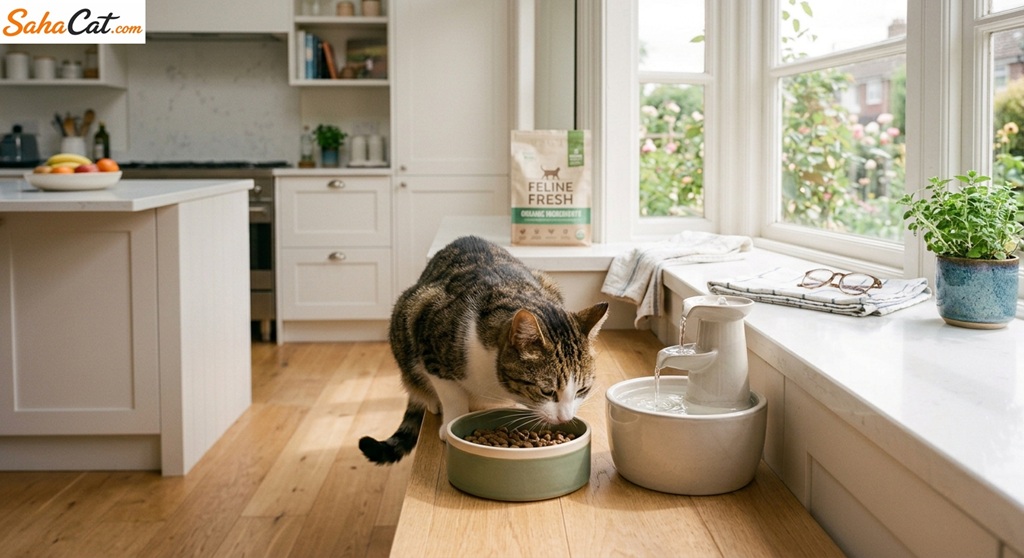
- Food and water bowls — shallow and wide, since deep bowls press against a cat’s whiskers on every bite. Stainless steel or ceramic cleans easier than plastic and doesn’t hold odor the way plastic can over time.
- Age-appropriate food — kitten, adult, and senior formulas differ enough in nutrient balance that matching life stage matters more than brand.
- A litter box, litter, and a scoop — see below; this is the category most people underthink.
- A carrier — for the trip home, and every vet visit after that. Buying one under stress, after the fact, is a common first-week scramble.
- A bed or a designated resting spot — cats sleep 12–16 hours a day on average, so this isn’t a luxury item.
- A collar with an ID tag — even for a cat who’ll be strictly indoors. “Indoor-only” and “never gets out” aren’t the same guarantee.
The Litter Box Details That Matter More Than the Box Itself
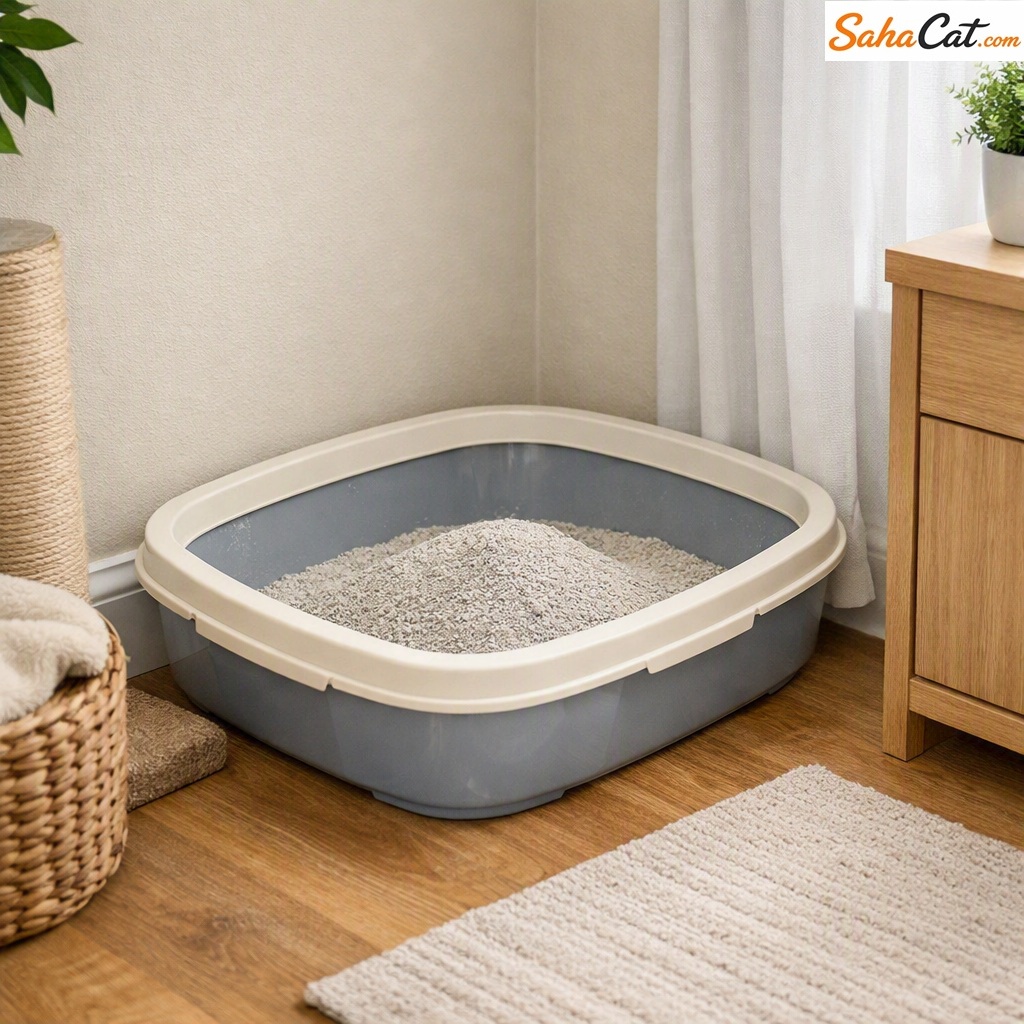
This is where most new-owner litter problems actually start, and it’s rarely about the litter brand:
- Size: the box should be at least 1.5 times your cat’s body length. A box that forces your cat to crouch to fit is one of the more common, and most fixable, causes of a cat avoiding it.
- Covered vs. open: hooded boxes look tidier to owners, but many feline behaviorists advise against them — a covered box traps odor inside (which cats notice far more than people do) and can make it hard for a cat to squat and turn around comfortably, especially larger cats.
- Scent: start with unscented clumping litter. A fragrance that smells fine to you can be a reason a cat stops using the box altogether.
- Placement: away from food and water, and somewhere quiet — not next to a noisy appliance a cat has to pass to reach it.
If You Have (or Plan to Have) More Than One Cat
The math changes, and this is the part single-cat checklists skip entirely. The standard guidance is one litter box per cat, plus one extra — so two cats means three boxes, not two. They also shouldn’t all be lined up in the same spot; cats can treat a row of boxes as a single resource and one cat may guard access to all of them. Food and water should be similarly spread across more than one location so a more confident cat can’t monopolize the only bowl.
Grooming: What Actually Depends on Your Cat
Skip the temptation to buy a full grooming kit on day one — most of it depends on the individual cat:
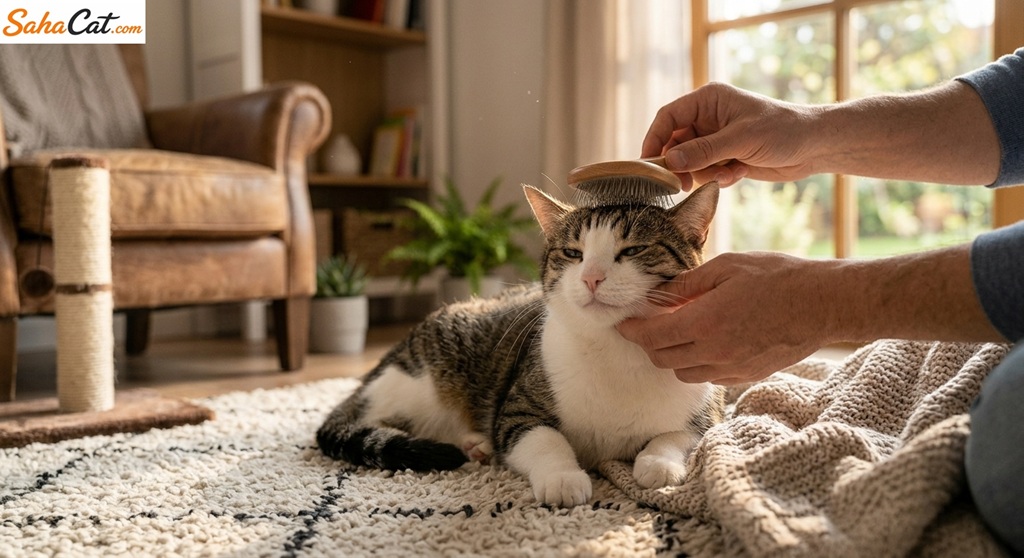
- A slicker brush for long-haired cats or a rubber grooming brush for short-haired cats — the wrong type for the coat does little.
- Cat-specific nail clippers — human clippers can crush rather than cut cleanly.
- A toothbrush and cat-safe toothpaste — dental disease is common enough in cats that starting the habit early matters more than most owners expect, even if actual brushing sessions come later once your cat is settled in.
What Can Reasonably Wait
None of these are wrong to buy — they’re just not what determines whether the first week goes smoothly:
- A water fountain — helps cats who naturally drink too little, but a bowl works fine for many cats. Worth adding if you notice your cat isn’t drinking much, not before.
- A cat tree or wall shelf — genuinely useful for climbing and a sense of security, but a windowsill or a cleared-off piece of furniture can substitute in week one.
- Grooming wipes and puzzle feeders — nice-to-haves once you know your cat’s habits, not day-one requirements.
The One Item New Owners Skip Most Often
A scratching post, set up from day one, not added after furniture damage starts. Scratching is a physical need, not a behavior problem to correct after the fact — a cat without an approved surface will find one on their own, and by then the couch has already become the default.
Kitten vs. Adult Rescue: One Real Difference
A kitten will typically need a lower-sided litter box at first, simply because a standard adult box can be too tall to climb into comfortably. An adult cat adopted from a shelter, on the other hand, often already has established preferences — for litter type, food texture, or box style — that are worth asking the shelter or foster about before you buy anything, rather than guessing and rebuying.
Last reviewed: September 2026